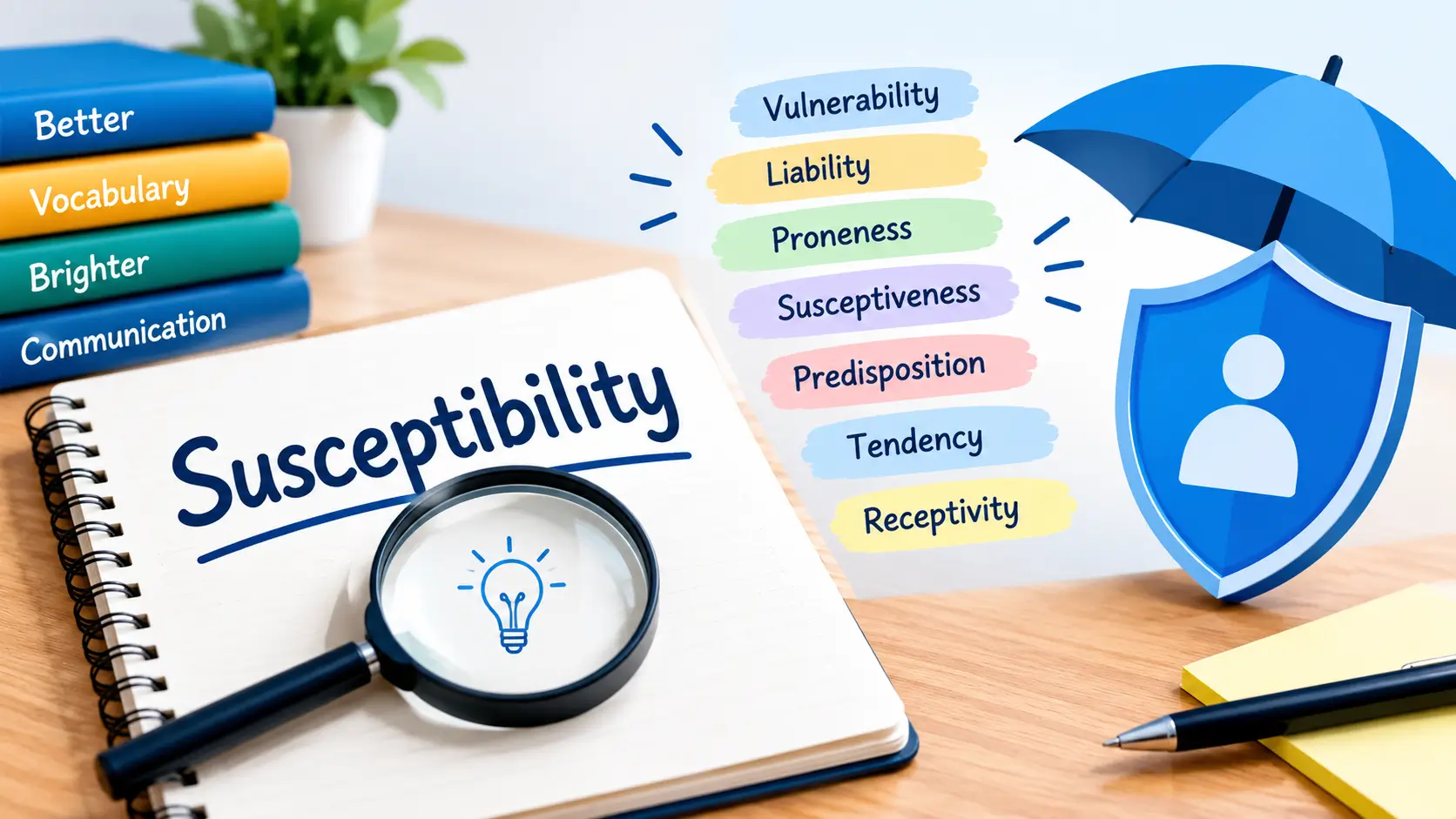
A good susceptibility synonym is vulnerability, openness, or sensitivity, depending on the context. These words describe how easily someone or something can be affected, harmed, changed, or influenced. The best choice depends on whether you are discussing health, emotions, risks, ideas, or other situations.
Introduction
Imagine a child walking outside without a jacket on a cold morning. The child may feel the cold more quickly than someone wearing warm clothes. That small situation shows why word choice matters when we describe how easily something can be affected.
For example, a plant may be more likely to suffer from a certain disease than another plant. The right word can make that idea clearer and easier to understand. Students can use these words to make essays stronger. Bloggers can avoid using the same word again and again. Content writers can create clearer and more natural articles. Daily English users can choose words that fit each situation better.
Also, knowing related words helps you understand what you read. However, not every synonym works in every sentence. So, learning the small differences is useful.
“Words are, of course, the most powerful drug used by mankind.” — Rudyard Kipling
Choosing the right alternative can therefore make your writing sound more exact and natural.
“The difference between the right word and the almost right word is the difference between lightning and a lightning bug.” — Mark Twain
50 Synonyms for Susceptibility
1. Vulnerability
Meaning: Vulnerability means being easily hurt, affected, or harmed by something.
Examples: Children may show vulnerability during stressful times.
Examples: His vulnerability made him seek help.
2. Sensitivity
Meaning: Sensitivity means being easily affected by feelings, changes, or outside influences.
Examples: Her skin has high sensitivity to sunlight.
Examples: The test measures sensitivity to allergens.
3. Openness
Meaning: Openness means being ready to receive ideas, feelings, or outside influence.
Examples: His openness helped new ideas grow.
Examples: Openness can improve teamwork at work.
4. Exposure
Meaning: Exposure means being placed where something harmful or powerful can affect you.
Examples: Long exposure to sunlight can damage skin.
Examples: Workers had exposure to loud sounds.
5. Liability
Meaning: Liability means a weakness that makes someone or something more likely to suffer harm.
Examples: Poor security became a serious liability.
Examples: Weak passwords create a major liability.
6. Weakness
Meaning: Weakness means a condition that makes someone or something less protected.
Examples: Poor planning was his main weakness.
Examples: The storm found a weakness in defenses.
7. Susceptibleness
Meaning: Susceptibleness means the state of being easily affected by something.
Examples: The study examined plant susceptibleness to disease.
Examples: Age may increase susceptibleness to infection.
8. Receptiveness
Meaning: Receptiveness means being willing or ready to accept something new.
Examples: Her receptiveness encouraged honest discussion.
Examples: The team showed receptiveness toward change.
9. Responsiveness
Meaning: Responsiveness means reacting quickly or strongly to something that happens.
Examples: The medicine improved his responsiveness to treatment.
Examples: Her responsiveness surprised the doctor.
10. Impressionability
Meaning: Impressionability means being easily influenced by people, ideas, or experiences.
Examples: Young children often show great impressionability.
Examples: His impressionability made advertising very powerful.
11. Influenceability
Meaning: Influenceability means being easily changed by another person or outside force.
Examples: Teenagers may show influenceability among friends.
Examples: His influenceability caused poor decisions.
12. Malleability
Meaning: Malleability means being easy to change, shape, or influence.
Examples: Young minds often have greater malleability.
Examples: The material shows excellent malleability under heat.
13. Fragility
Meaning: Fragility means being easily damaged, broken, or weakened.
Examples: The glass showed extreme fragility.
Examples: Emotional fragility can require gentle support.
14. Delicacy
Meaning: Delicacy means a condition that needs careful handling or protection.
Examples: The patient’s condition required great delicacy.
Examples: Handle these flowers with delicacy.
15. Susceptibleness
Meaning: Susceptibleness describes how easily someone or something can be affected.
Examples: Researchers studied children’s susceptibleness to stress.
Examples: Certain crops have greater susceptibleness to frost.
16. Receptivity
Meaning: Receptivity means willingness to accept or respond to something.
Examples: Her receptivity made the lesson easier.
Examples: Students showed receptivity toward the new method.
17. Permissiveness
Meaning: Permissiveness means allowing things to happen with few limits or controls.
Examples: Too much permissiveness may create problems.
Examples: Parental permissiveness can affect behavior.
18. Accessibility
Meaning: Accessibility means being easy to reach, enter, use, or affect.
Examples: The website improved accessibility for users.
Examples: Better accessibility helped everyone join.
19. Availability
Meaning: Availability means being open or ready for use, contact, or influence.
Examples: His availability made support easier.
Examples: Medicine availability can affect patient care.
20. Vulnerableness
Meaning: Vulnerableness means having little protection against harm or unwanted effects.
Examples: The report discussed children’s vulnerableness.
Examples: Poverty can increase vulnerableness during disasters.
21. Susceptibility to Disease
Meaning: Susceptibility to disease means being more likely to develop an illness.
Examples: Age can affect susceptibility to disease.
Examples: Genes may increase susceptibility to disease.
22. Risk
Meaning: Risk means the chance that something harmful or unwanted may happen.
Examples: Smoking increases the risk of illness.
Examples: Workers faced a higher risk outdoors.
23. Propensity
Meaning: Propensity means a natural tendency to behave or react in a certain way.
Examples: He has a propensity for worry.
Examples: Some people have a propensity toward stress.
24. Tendency
Meaning: Tendency means a usual way of acting, changing, or reacting.
Examples: She has a tendency to worry.
Examples: Dry skin has a tendency to crack.
25. Inclination
Meaning: Inclination means a natural feeling or desire to do something.
Examples: He had little inclination to argue.
Examples: Her inclination was to trust people.
26. Predisposition
Meaning: Predisposition means a natural tendency that makes something more likely.
Examples: Genes can create a predisposition to illness.
Examples: His family history showed a predisposition.
27. Liability to
Meaning: Liability to means having a greater chance of being affected by something.
Examples: Children have liability to certain infections.
Examples: The crop has liability to frost.
28. Susceptiveness
Meaning: Susceptiveness means being easily affected by people, events, or conditions.
Examples: Her emotional susceptiveness was noticeable.
Examples: Stress increased his susceptiveness to fear.
29. Reactivity
Meaning: Reactivity means how strongly someone or something responds to a change.
Examples: The chemical has high reactivity.
Examples: Stress can increase emotional reactivity.
30. Responsiveness to
Meaning: Responsiveness to describes how strongly something reacts to a particular influence.
Examples: The patient showed responsiveness to treatment.
Examples: Plants differ in responsiveness to light.
31. Vulnerability to
Meaning: Vulnerability to means being especially open to harm from something.
Examples: Flooding increased vulnerability to disease.
Examples: Children have vulnerability to online risks.
32. Sensitivity to
Meaning: Sensitivity to means reacting easily or strongly to something specific.
Examples: She has sensitivity to bright lights.
Examples: His sensitivity to noise causes discomfort.
33. Openness to
Meaning: Openness to means being willing to accept ideas, changes, or experiences.
Examples: Openness to feedback improves learning.
Examples: Her openness to change helped everyone.
34. Exposure to
Meaning: Exposure to means coming into contact with something that may affect you.
Examples: Exposure to smoke can harm lungs.
Examples: Workers limited exposure to chemicals.
35. Susceptibility to Infection
Meaning: Susceptibility to infection means being more likely to develop an infection.
Examples: Poor hygiene may increase susceptibility to infection.
Examples: Stress can affect susceptibility to infection.
36. Emotional Sensitivity
Meaning: Emotional sensitivity means being easily affected by feelings or emotional situations.
Examples: Her emotional sensitivity helps her understand others.
Examples: Emotional sensitivity can make criticism painful.
37. Psychological Vulnerability
Meaning: Psychological vulnerability means being easily affected by emotional or mental stress.
Examples: Stress may increase psychological vulnerability.
Examples: Support can reduce psychological vulnerability.
38. Genetic Predisposition
Meaning: Genetic predisposition means inherited traits that make something more likely.
Examples: Genes may create genetic predisposition to disease.
Examples: Doctors sometimes study genetic predisposition.
39. Riskiness
Meaning: Riskiness means having a greater chance of causing harm or trouble.
Examples: The riskiness of the activity worried parents.
Examples: Weather increased the journey’s riskiness.
40. Precariousness
Meaning: Precariousness means being in an uncertain or unsafe condition.
Examples: The job’s precariousness caused stress.
Examples: Financial precariousness affected the family.
41. Insecurity
Meaning: Insecurity means lacking safety, confidence, or protection from possible problems.
Examples: Financial insecurity caused many worries.
Examples: His insecurity made public speaking difficult.
42. Defenselessness
Meaning: Defenselessness means having little ability to protect yourself from harm.
Examples: The animal’s defenselessness was clear.
Examples: Darkness increased their feeling of defenselessness.
43. Powerlessness
Meaning: Powerlessness means having little control over what happens.
Examples: The delay created feelings of powerlessness.
Examples: She disliked the sense of powerlessness.
44. Susceptibility to Influence
Meaning: Susceptibility to influence means being easily changed by another person’s ideas.
Examples: Advertising can increase susceptibility to influence.
Examples: Friends may affect susceptibility to influence.
45. Suggestibility
Meaning: Suggestibility means being easily influenced by suggestions from other people.
Examples: Young children may show high suggestibility.
Examples: The test measured suggestibility during interviews.
46. Persuadability
Meaning: Persuadability means being easy to convince through words or arguments.
Examples: His persuadability surprised his friends.
Examples: The campaign tested audience persuadability.
47. Vulnerable State
Meaning: A vulnerable state means being in a condition where harm can happen easily.
Examples: The patient was in a vulnerable state.
Examples: Fear can place people in vulnerable states.
48. Susceptible Nature
Meaning: Susceptible nature describes someone or something easily affected by outside conditions.
Examples: Her susceptible nature required careful support.
Examples: The plant’s susceptible nature needs protection.
49. Sensitivity Level
Meaning: Sensitivity level describes how strongly something reacts to an outside effect.
Examples: The device has a high sensitivity level.
Examples: Researchers changed the sensitivity level carefully.
50. Degree of Vulnerability
Meaning: Degree of vulnerability describes how much protection something has against possible harm.
Examples: The study measured each person’s degree of vulnerability.
Examples: Age can change the degree of vulnerability.
Susceptibility synonym medical
In medical writing, useful alternatives include vulnerability, sensitivity, predisposition, risk, and proneness. The best choice depends on the exact sentence. For example, “genetic predisposition” often fits inherited health risks, while “sensitivity” can describe reactions to medicines or allergens. In formal medical writing, choose the term that clearly explains the type and cause of the risk.
Susceptibility antonym
Common antonyms include resistance, immunity, protection, strength, and resilience. These words describe a lower chance of being affected or harmed. For example, resistance may describe protection from a disease, while resilience can describe the ability to recover after stress. The correct antonym depends on what kind of susceptibility you are discussing.
Genetic susceptibility synonym
For genetic contexts, useful alternatives include genetic predisposition, inherited vulnerability, inherited tendency, genetic risk, and hereditary predisposition. These terms explain how inherited traits can make a person more likely to develop a condition or show a certain response. However, they do not mean that an outcome is certain. Genes are only one factor in many situations.
Another word for susceptibility in an essay
In an essay, you can replace susceptibility with vulnerability, sensitivity, predisposition, tendency, proneness, risk, or openness, depending on your meaning. “Vulnerability” works well for harm, while “predisposition” suits a natural or inherited tendency. Using the right alternative prevents repetition and makes academic writing more precise.
Susceptible synonym and antonym
A susceptible synonym can be “vulnerable,” “sensitive,” “prone,” “open,” or “receptive.” An antonym can be “resistant,” “protected,” “immune,” or “insensitive.” The correct choice depends on the situation. For example, someone susceptible to illness may be vulnerable, while someone resistant to that illness has greater protection.
People Also Ask
What is the meaning of susceptibility?
Susceptibility describes how easily a person, animal, plant, material, or system can be affected by something. It often relates to harm, illness, pressure, change, or influence. For example, a person may have greater susceptibility to a disease, while a material may have greater susceptibility to heat damage. The word focuses on the chance or ease of being affected, not on whether the result is certain.
What are 5 good synonyms?
Five useful synonyms are vulnerability, sensitivity, predisposition, proneness, and openness. Vulnerability works when something can be harmed easily. Sensitivity fits strong reactions. Predisposition describes a natural or inherited tendency. Proneness means being likely to experience something. Openness works when someone is ready to receive ideas or influence. Always choose the synonym that matches the exact context of your sentence.
What is the meaning of susceptible?
Susceptible means easily affected, harmed, influenced, or changed by something. For example, a person may be susceptible to illness, while a child may be susceptible to peer pressure. The word is an adjective, so it normally describes a person, thing, or group. It often appears with “to,” as in “susceptible to infection” or “susceptible to change.”
What is the synonym of the word susceptible?
Common synonyms for susceptible include vulnerable, sensitive, prone, liable, receptive, impressionable, and open. “Vulnerable” is useful when harm is involved, while “sensitive” often describes strong reactions. “Prone” means likely to experience something. “Receptive” is better when someone is willing to accept ideas. The best synonym depends on the sentence and the exact meaning you want.
Conclusion
Learning synonyms for susceptibility gives you more control over your English. Instead of using one word in every sentence, you can choose a word that matches your exact meaning. Vulnerability may fit harm, sensitivity may fit reactions, and predisposition may fit natural or genetic risk.
This skill is useful in many areas. Students can make essays clearer and less repetitive. Bloggers can write smoother articles that are easier to read. Content writers can explain difficult ideas with simple words. In daily conversations, the right word helps people understand your message faster.
Try using these words in small ways. Replace repeated words in an old essay. Add a better synonym to an email. Use a new word in a conversation. Then notice how the meaning changes slightly.
“The limits of my language mean the limits of my world.” — Ludwig Wittgenstein
You do not need to memorize all 50 words at once. Start with five common choices and practice them often. Over time, your vocabulary will grow naturally.
“Words make worlds.” — Don DeLillo
The goal is not to use difficult words. It is to choose the clearest and most suitable word for every situation.

Emily writes simple, useful, and reader-friendly content, helping LexoraHubs provide valuable information to its audience.