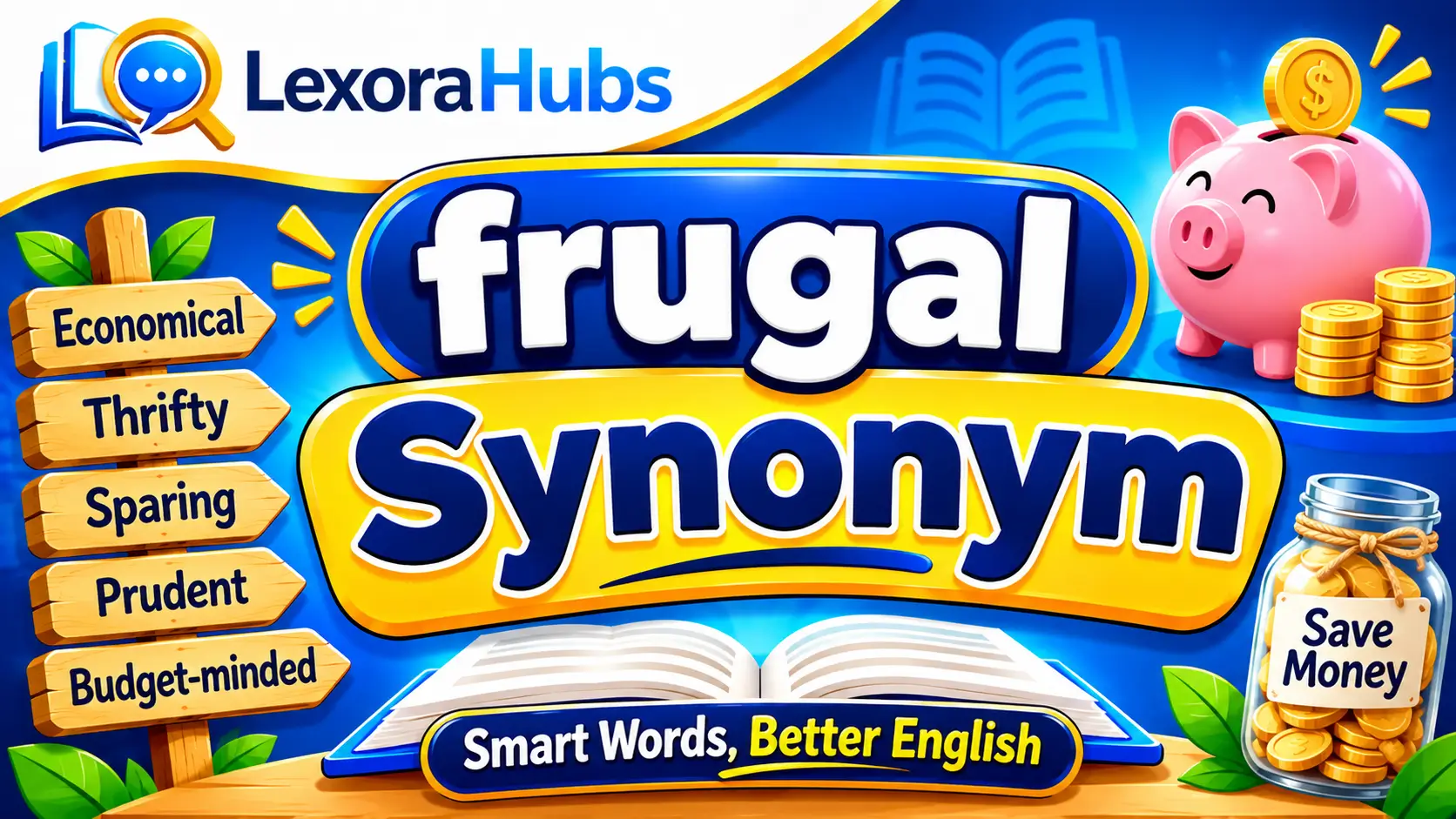
Frugal synonyms include thrifty, economical, cost-conscious, prudent, sparing, budget-minded, resourceful, and economical-minded. Although these words describe careful spending or responsible use of money and resources, they do not always mean exactly the same thing. Some emphasize saving money, while others highlight wise financial decisions, avoiding waste, or living within a budget.
This guide explains the most useful alternatives to frugal, their meanings, differences, and examples. As a result, you can choose the right word for your sentence and tone.
What Does Frugal Mean?
Frugal means being careful with money, avoiding unnecessary expenses, and using available resources wisely. A frugal person tries to get the most value from what they have without wasting money, food, time, or other resources.
Example: Sarah lives a frugal lifestyle by cooking at home, comparing prices, and avoiding unnecessary purchases.
The word is commonly used when discussing personal finances, shopping habits, and everyday lifestyles. It can also describe businesses that manage expenses carefully. Being frugal generally has a positive meaning because it suggests discipline and thoughtful decision-making rather than simply refusing to spend money.
Quick Answer: Synonyms of Frugal
Here are 10 useful synonyms of frugal and the situations in which they work best.
| Synonym | Meaning | Best Used For |
|---|---|---|
| Thrifty | Careful about spending money | Everyday financial habits |
| Economical | Avoiding unnecessary costs or waste | Spending and resource management |
| Prudent | Showing good judgment | Financial decisions |
| Sparing | Using something in limited amounts | Food, money, and resources |
| Cost-conscious | Aware of expenses and prices | Shopping and business |
| Budget-minded | Focused on following a budget | Personal finances |
| Saving | Trying to keep money rather than spend it | Everyday conversations |
| Resourceful | Making good use of available resources | Problem-solving and lifestyle |
| Prudent-minded | Careful and thoughtful about decisions | General financial planning |
| Abstemious | Avoiding excess or overindulgence | Formal and personal habits |
10 Best Synonyms for Frugal
1. Thrifty
Thrifty describes someone who spends money carefully and makes sensible purchasing decisions. Like frugal, it suggests avoiding waste, but it often emphasizes practical saving habits.
Example:
- My grandmother is thrifty and always looks for discounts before shopping.
- Being thrifty helped Daniel save enough money for his first car.
Tone: Friendly, positive, and commonly used in everyday English.
Frugal vs. Thrifty: Frugal emphasizes avoiding unnecessary spending, while thrifty often highlights finding smart ways to save money.
2. Economical
Economical means using money, time, or resources efficiently without unnecessary expense. It can describe people, products, methods, and decisions.
Example:
- Buying a fuel-efficient car is an economical choice for daily commuters.
- We prepared an economical meal using ingredients already in the kitchen.
Tone: Neutral and professional, suitable for everyday and business writing.
Frugal vs. Economical: Frugal usually describes spending habits, while economical often describes something that saves money or resources.
3. Prudent
Prudent means showing careful judgment and thinking about possible consequences before making decisions. It is especially useful when discussing financial planning and responsible choices.
Example:
- Investing a portion of her income was a prudent financial decision.
- It is prudent to save money before making a major purchase.
Tone: Formal, professional, and associated with wisdom.
Frugal vs. Prudent: Frugal focuses on spending less, while prudent focuses on making wise decisions, which may sometimes involve spending more.
4. Sparing
Sparing means using something carefully or in limited quantities rather than using it excessively. It can refer to money, food, words, or other resources.
Example:
- He was sparing with his money during the difficult months.
- Use the expensive ingredients sparingly to avoid unnecessary waste.
Tone: Neutral to formal, depending on the sentence.
Frugal vs. Sparing: Frugal describes an overall approach to spending, whereas sparing emphasizes limiting the amount used.
5. Cost-Conscious
Cost-conscious describes someone who pays attention to prices and considers expenses before purchasing something. It is particularly useful in business, shopping, and household budgeting.
Example:
- Cost-conscious shoppers compare several brands before buying appliances.
- Our company uses cost-conscious strategies to manage operating expenses.
Tone: Professional, modern, and practical.
Frugal vs. Cost-Conscious: A frugal person generally avoids unnecessary expenses, while a cost-conscious person actively considers costs when making decisions.
6. Budget-Minded
Budget-minded describes someone who makes decisions based on a spending plan or financial limits. It highlights planning and financial discipline.
Example:
- Budget-minded families often plan their grocery shopping in advance.
- She chose a budget-minded vacation that included affordable accommodation.
Tone: Conversational and practical.
Frugal vs. Budget-Minded: Frugal describes careful spending habits, while budget-minded emphasizes following a planned budget.
7. Saving
Saving relates to keeping money instead of spending it. Although it is not always a direct adjective synonym for frugal, it can describe habits and behaviors associated with financial discipline.
Example:
- He is saving with a goal of buying his own home.
- Their saving habits helped them prepare for unexpected expenses.
Tone: Everyday and informal.
Frugal vs. Saving: Frugal describes a general attitude toward spending, while saving specifically involves setting money aside or avoiding spending it.
8. Resourceful
Resourceful describes someone who finds clever ways to use available materials, money, and opportunities. It emphasizes creativity and practical problem-solving rather than simply spending less.
Example:
- The resourceful student repaired her old laptop instead of buying another one.
- He was resourceful enough to prepare dinner using only a few ingredients.
Tone: Strongly positive and encouraging.
Frugal vs. Resourceful: Frugal emphasizes avoiding waste, while resourceful emphasizes finding effective solutions with limited resources.
9. Careful
Careful means paying attention to decisions and avoiding unnecessary risks or mistakes. When discussing money, it can describe someone who thinks before spending.
Example:
- Mark is careful with money and rarely makes impulsive purchases.
- Being careful with household expenses helped them manage their income.
Tone: Simple, neutral, and suitable for everyday communication.
Frugal vs. Careful: Frugal specifically suggests avoiding wasteful spending, while careful has a broader meaning that includes many types of decisions.
10. Abstemious
Abstemious describes someone who avoids excess, particularly when consuming food, drinks, or other pleasures. It can overlap with frugal when discussing a restrained lifestyle.
Example:
- His abstemious lifestyle helped him avoid unnecessary expenses.
- She maintained an abstemious routine and rarely indulged in expensive luxuries.
Tone: Formal and somewhat literary.
Frugal vs. Abstemious: Frugal focuses on careful spending and resource use, while abstemious emphasizes avoiding excessive consumption or indulgence.
Synonyms of Frugal in Different Contexts
The best alternative depends on whether you are discussing money, lifestyle, or resource management.
1. Frugal in Money and Spending
When describing someone who manages money carefully, choose words that emphasize financial discipline and saving.
Use:
- Thrifty
- Economical
- Cost-conscious
- Budget-minded
- Prudent
Example: Emma is frugal with her monthly income.
Alternative rewrites:
- Emma is thrifty with her monthly income.
- Emma is careful about how she spends her money.
2. Frugal in Lifestyle and Habits
When describing someone who avoids luxury and unnecessary purchases, use words that communicate simplicity and moderation.
Use:
- Simple
- Modest
- Unassuming
- Abstemious
- Restrained
Example: They chose a frugal lifestyle to focus on their long-term financial goals.
Alternative rewrites:
- They adopted a modest lifestyle to achieve their financial goals.
- They embraced simple living to avoid unnecessary expenses.
3. Frugal in Using Resources
When discussing food, materials, energy, or other resources, choose words that emphasize efficiency and avoiding waste.
Use:
- Economical
- Sparing
- Efficient
- Resourceful
- Conservative
Example: The restaurant uses frugal methods to reduce food waste.
Alternative rewrites:
- The restaurant uses economical methods to reduce food waste.
- The restaurant manages its resources efficiently to minimize waste.
Frugal vs. Thrifty
Frugal and thrifty are closely related words. Both describe careful spending and avoiding unnecessary expenses. However, thrifty often has a stronger connection to finding bargains and saving money through smart shopping.
Contrasting examples:
- My frugal lifestyle helps me avoid unnecessary purchases.
- My thrifty shopping habits help me find the best prices.
Frugal vs. Economical
Frugal usually describes a person’s attitude toward spending, while economical often describes something that provides good value or uses fewer resources.
Contrasting examples:
- My father is frugal and avoids expensive hobbies.
- This economical washing machine uses less electricity.
Frugal vs. Prudent
Frugal means avoiding unnecessary spending, whereas prudent means making wise decisions after considering possible outcomes. A prudent person may spend more when doing so offers better long-term value.
Contrasting examples:
- She is frugal and avoids buying expensive clothes.
- She made a prudent decision to purchase a reliable winter coat.
Frugal vs. Cheap
Frugal and cheap are sometimes confused, but their meanings and connotations are different. Frugal generally describes sensible spending, while cheap can suggest unwillingness to spend money even when spending is necessary.
Contrasting examples:
- He is frugal and carefully compares product quality before purchasing.
- He is cheap and refuses to replace his broken shoes.
Frugal is generally positive, while cheap can sound critical or negative when describing a person.
Formal Synonyms for Frugal
In professional writing, academic discussions, and formal communication, these alternatives can help express careful spending more precisely.
- Economical
- Prudent
- Cost-conscious
- Resource-efficient
- Sparing
- Conservative
- Abstemious
- Financially disciplined
Not all these words are exact synonyms, so consider the context and intended meaning before replacing frugal.
Simple Synonyms for Frugal
If you want easy, everyday alternatives, these words are straightforward and widely understood.
- Thrifty
- Careful
- Saving
- Modest
- Simple
- Economical
For example, instead of saying, “My brother is frugal,” you can say, “My brother is careful with money.”
Positive Words Related to Frugal
Frugality is often associated with positive personal qualities, especially financial responsibility and thoughtful resource management.
- Responsible
- Thrifty
- Resourceful
- Prudent
- Disciplined
- Economical
- Sensible
- Efficient
Example: Her responsible and resourceful approach to money helped her build a comfortable financial future.
Examples of Frugal in Sentences
Here are 10 natural sentences using frugal and its related synonyms in different situations.
- My parents are thrifty and always look for affordable options when shopping.
- Choosing public transportation is an economical way to reduce monthly expenses.
- It was prudent to save money before purchasing a new house.
- He was sparing with his resources during the financial crisis.
- Cost-conscious customers often compare prices before making important purchases.
- Budget-minded students look for affordable textbooks and housing.
- Her resourceful approach helped her decorate the apartment without spending much money.
- A modest lifestyle can make it easier to achieve long-term financial goals.
- The company adopted efficient methods to reduce unnecessary operating costs.
- His disciplined spending habits helped him build an emergency fund.
Common Mistakes With Frugal Synonyms
Using a similar word without considering its exact meaning can make a sentence confusing. Here are some common mistakes to avoid.
1. Confusing Frugal With Cheap
Less precise: My uncle is cheap because he carefully plans his expenses.
Better: My uncle is frugal because he carefully plans his expenses.
Explanation: Cheap can suggest stinginess or unwillingness to spend. Frugal communicates sensible financial management.
2. Using Economical to Describe Every Person
Less precise: My sister is economical because she never wastes money.
Better: My sister is thrifty because she never wastes money.
Explanation: Economical often describes methods, products, and choices. Thrifty is generally more natural when describing a person’s spending habits.
3. Confusing Prudent With Thrifty
Less precise: He was prudent because he purchased the cheapest available product.
Better: He was thrifty because he purchased an affordable product.
Explanation: Prudent emphasizes good judgment, not necessarily choosing the cheapest option.
4. Using Sparing When You Mean Saving
Less precise: She is sparing because she puts money into her savings account every month.
Better: She is disciplined about saving because she puts money into her savings account every month.
Explanation: Sparing usually describes limited use or consumption, while saving describes keeping money for future needs.
Related Words to Frugal
These related words can help expand your vocabulary when discussing money management, simple living, and responsible spending.
- Frugality
- Thrift
- Thriftiness
- Economy
- Economical
- Budgeting
- Savings
- Financial discipline
- Money management
- Minimalism
- Simplicity
- Moderation
- Resourcefulness
- Conservation
- Financial responsibility
These words have different meanings and uses, so choose the one that best communicates your intended idea.
Antonyms of Frugal
There is no single perfect opposite of frugal because the word can describe spending habits, lifestyles, and resource management. However, several words express excessive spending, wastefulness, or a lack of financial restraint.
Common antonyms include:
- Wasteful
- Extravagant
- Lavish
- Spendthrift
- Extravagant-minded
- Imprudent
- Profligate
Example: While her frugal brother carefully manages his income, she enjoys an extravagant lifestyle and frequently purchases expensive items.
FAQs About Synonyms of Frugal
1. What Is the Closest Synonym for Frugal?
Thrifty is generally the closest synonym for frugal. Both describe someone who spends carefully, avoids waste, and makes sensible financial decisions.
2. What Is Another Word for Frugal in Life?
Words such as modest, simple, thrifty, and economical can describe a frugal lifestyle. The best choice depends on whether you mean simple living or careful money management.
3. What Is a Positive Synonym for Frugal?
Resourceful, thrifty, prudent, and financially responsible are positive alternatives. These words highlight good judgment, discipline, and the ability to manage resources wisely.
4. What Is a Poetic Synonym for Frugal?
Spare and abstemious can work in literary or poetic writing, depending on the sentence. They suggest restraint, simplicity, and freedom from excess.
5. Is Frugal the Same as Thrifty?
They have very similar meanings, but they are not completely identical. Frugal emphasizes avoiding unnecessary expenses, while thrifty often highlights finding ways to save money.
6. What Is the Opposite of Frugal?
Wasteful, extravagant, lavish, and spendthrift are common opposites. These words describe excessive spending or careless use of resources.
Conclusion
The best synonyms for frugal include thrifty, economical, prudent, sparing, cost-conscious, and budget-minded. Each alternative communicates a slightly different aspect of careful spending, financial discipline, or responsible resource management. Thrifty is usually the closest everyday replacement, while economical and prudent work well in more specific contexts.
When choosing a frugal synonym, consider the meaning, tone, and situation. Whether you are writing about personal finances, a simple lifestyle, or efficient resource use, selecting the right alternative will make your writing clearer, more natural, and more precise.

Ryan is a content writer focused on creating informative and well-structured articles for LexoraHubs readers.