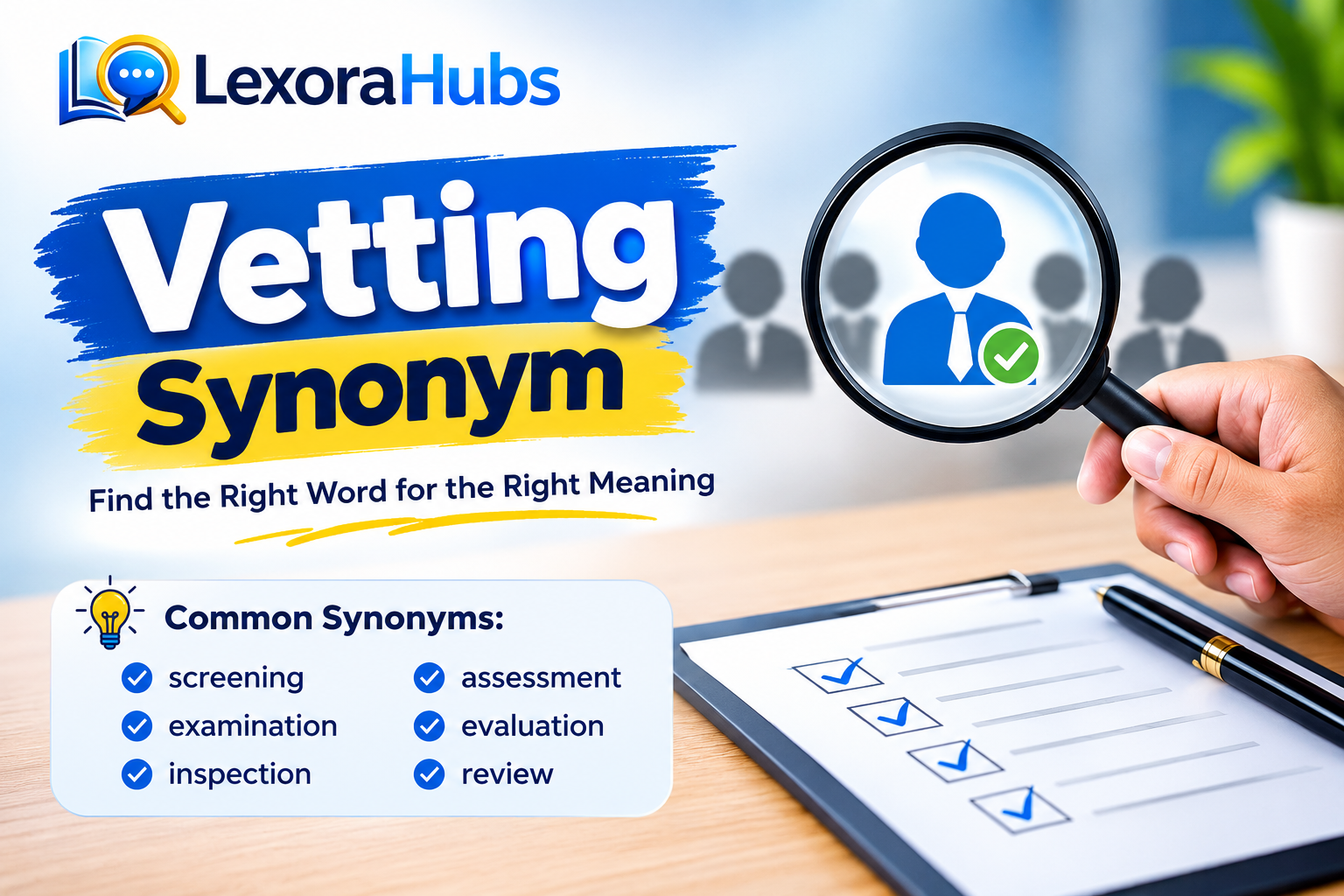
A synonym for vetting is screening, checking, reviewing, or examining someone or something before making a choice. Other useful words include assessing, verifying, inspecting, and evaluating. The best vetting synonym depends on the situation, such as hiring workers, checking facts, reviewing applications, or choosing a trusted person.
Introduction
Imagine a company looking for a new worker. The manager reads applications, checks work history, and calls past employers. These steps help the manager make a wise choice. In this situation, knowing the right words for vetting makes it easier to explain the process.
For example, a school may check a teacher’s records before offering a job. You could describe this action as screening, reviewing, or checking the teacher’s background. Each word has a slightly different use, so choosing carefully makes your writing clearer.
Students can use these words to improve essays and build stronger vocabulary. Bloggers can use them to create useful, easy-to-read articles. Content writers can avoid repeating the same word in every paragraph. Daily English users can speak and write with more confidence.
“The right word can make a simple idea clear.”
However, not every synonym fits every sentence. Some words sound formal, while others work best in daily conversation. Learning their meanings and examples will help you choose the right word for each situation.
“Good writing begins with clear and careful choices.”
50 Synonyms for Vetting With Meanings and Examples
1. Screening
Meaning: Screening means checking people or things to decide whether they meet certain needs.
Examples: The company is screening new job applicants. We finished screening the forms before lunch.
2. Checking
Meaning: Checking means looking at something carefully to find mistakes or confirm facts.
Examples: She is checking his work history today. Please finish checking these papers before the meeting.
3. Reviewing
Meaning: Reviewing means looking at information again to understand it or judge its quality.
Examples: The manager is reviewing each job application. Dad spent an hour reviewing the report.
4. Examining
Meaning: Examining means looking closely at something to learn more about it.
Examples: The team is examining every document carefully. Our teacher examined the answers before grading them.
5. Inspecting
Meaning: Inspecting means looking closely at something to find problems or check its condition.
Examples: The officer is inspecting the safety records. They inspected the building before signing the lease.
6. Assessing
Meaning: Assessing means judging the quality, value, or ability of someone or something.
Examples: The coach is assessing each player’s skills. We assessed the plan before choosing it.
7. Evaluating
Meaning: Evaluating means deciding how good, useful, or suitable something is.
Examples: The team is evaluating three job candidates. She evaluated the results before sharing her choice.
8. Verifying
Meaning: Verifying means checking that information is true, correct, or real.
Examples: The clerk is verifying his home address. Please verify the details before sending the form.
9. Validating
Meaning: Validating means confirming that something meets rules or has the correct details.
Examples: The system is validating every new entry. We validated the results with another test.
10. Investigating
Meaning: Investigating means studying facts to discover what happened or whether something is true.
Examples: The company is investigating the missing funds. Police investigated the claim before taking action.
11. Auditing
Meaning: Auditing means checking records or accounts to make sure they are correct.
Examples: The firm is auditing its yearly accounts. They audited the records before the final report.
12. Scrutinizing
Meaning: Scrutinizing means examining something very closely to notice small details or possible problems.
Examples: The editor is scrutinizing every line carefully. She scrutinized the contract before signing it.
13. Vetting
Meaning: Vetting means checking someone’s background or something’s details before accepting or approving it.
Examples: The agency is vetting its new workers. We finished vetting the supplier before placing an order.
14. Reviewing Backgrounds
Meaning: Reviewing backgrounds means checking a person’s past records, work, or personal history.
Examples: The firm reviews backgrounds before hiring staff. They reviewed her background before offering the job.
15. Background Checking
Meaning: Background checking means looking into a person’s history before making an important decision.
Examples: Background checking is part of the hiring process. The school completed background checking for every new teacher.
16. Fact-Checking
Meaning: Fact-checking means checking claims against reliable sources to make sure they are true.
Examples: The reporter is fact-checking the story now. We fact-checked every claim before publishing the article.
17. Cross-Checking
Meaning: Cross-checking means comparing information from different sources to find errors or confirm facts.
Examples: She is cross-checking the names on the list. We cross-checked the figures before sharing them.
18. Confirming
Meaning: Confirming means making sure that information, plans, or details are correct.
Examples: He is confirming the meeting details today. Please confirm your address before we send anything.
19. Testing
Meaning: Testing means trying something to see whether it works or meets a standard.
Examples: The team is testing the new software. We tested the device before buying it.
20. Probing
Meaning: Probing means asking questions or studying details to discover hidden facts.
Examples: The reporter is probing the manager’s claims. They probed the issue before making changes.
21. Researching
Meaning: Researching means gathering facts and information to understand a subject better.
Examples: She is researching the company before applying. We researched the seller before placing our order.
22. Analyzing
Meaning: Analyzing means studying information carefully to understand its parts and meaning.
Examples: The team is analyzing the test results. He analyzed the figures before writing his report.
23. Appraising
Meaning: Appraising means judging the value, quality, or condition of something.
Examples: The expert is appraising the old painting. We appraised the offer before making a decision.
24. Judging
Meaning: Judging means forming an opinion after looking at facts or actions.
Examples: The panel is judging each entry fairly. She judged the plan by its results.
25. Qualifying
Meaning: Qualifying means checking whether someone meets the rules or needs for a role.
Examples: The office is qualifying applicants for the program. He qualified for the job after testing.
26. Certifying
Meaning: Certifying means officially confirming that someone or something meets set standards.
Examples: The board is certifying the new workers. They certified the results after checking the records.
27. Authenticating
Meaning: Authenticating means proving that something is real, genuine, or from the claimed source.
Examples: The bank is authenticating the customer’s identity. We authenticated the document before accepting it.
28. Screening Applicants
Meaning: Screening applicants means checking job seekers to find those who fit a role.
Examples: Human resources is screening applicants this week. They screened applicants before arranging any interviews.
29. Reviewing Credentials
Meaning: Reviewing credentials means checking someone’s education, training, skills, or official qualifications.
Examples: The hospital is reviewing the doctor’s credentials. We reviewed her credentials before hiring her.
30. Checking References
Meaning: Checking references means contacting people who can speak about someone’s work or character.
Examples: The manager is checking his references today. She checked references before choosing the new assistant.
31. Inspecting Records
Meaning: Inspecting records means looking through written files to find errors or confirm details.
Examples: The clerk is inspecting the company records. We inspected the files before closing the case.
32. Reviewing Evidence
Meaning: Reviewing evidence means studying facts or items that support or challenge a claim.
Examples: The lawyer is reviewing the evidence now. They reviewed the evidence before reaching a decision.
33. Due Diligence
Meaning: Due diligence means making careful checks before a deal, choice, or major commitment.
Examples: The buyer completed due diligence before purchasing. Investors perform due diligence before funding a company.
34. Due-Diligence Review
Meaning: A due-diligence review checks important facts, risks, and records before a business decision.
Examples: The team began its due-diligence review yesterday. Their review uncovered risks in the proposed deal.
35. Quality Checking
Meaning: Quality checking means examining a product or service to ensure it meets expected standards.
Examples: Workers are quality checking every finished item. Quality checking helped us find the problem.
36. Quality Control
Meaning: Quality control means using checks to keep products or work at a set standard.
Examples: Quality control begins before products leave. The factory improved quality control this year.
37. Risk Assessment
Meaning: Risk assessment means finding possible dangers before deciding how to act.
Examples: The team completed a risk assessment first. Risk assessment helped them avoid costly mistakes.
38. Compliance Checking
Meaning: Compliance checking means making sure actions or records follow rules and laws.
Examples: The office is compliance checking its new process. We completed compliance checking before the launch.
39. Monitoring
Meaning: Monitoring means watching an activity or situation to notice changes or problems.
Examples: The team is monitoring the supplier’s work. We monitored the project throughout the first month.
40. Reviewing Suitability
Meaning: Reviewing suitability means deciding whether someone or something is right for a specific purpose.
Examples: The panel is reviewing each candidate’s suitability. They reviewed the plan for our small office.
41. Examining Credentials
Meaning: Examining credentials means looking closely at proof of someone’s skills or qualifications.
Examples: The firm is examining his credentials today. We examined the certificates before approving her application.
42. Screening for Risks
Meaning: Screening for risks means checking for warning signs before accepting a person or plan.
Examples: The bank is screening for risks carefully. They screened the deal for possible legal problems.
43. Reviewing Applications
Meaning: Reviewing applications means reading requests to decide which ones meet the required conditions.
Examples: The team is reviewing applications this morning. We reviewed every application before choosing finalists.
44. Checking Qualifications
Meaning: Checking qualifications means making sure someone has the training or skills needed for a role.
Examples: The recruiter is checking her qualifications now. They checked the applicant’s qualifications before the interview.
45. Examining Claims
Meaning: Examining claims means checking statements carefully to see whether facts support them.
Examples: The reporter is examining the company’s claims. We examined his claims before sharing the news.
46. Reviewing Performance
Meaning: Reviewing performance means checking how well someone has done a task or job.
Examples: The manager is reviewing team performance today. We reviewed her performance at the end.
47. Assessing Credibility
Meaning: Assessing credibility means deciding whether a person or source seems honest and trustworthy.
Examples: The editor is assessing the source’s credibility. We assessed his credibility before using his story.
48. Confirming Identity
Meaning: Confirming identity means checking details to make sure someone is who they claim.
Examples: The guard is confirming each visitor’s identity. Please confirm your identity before collecting the parcel.
49. Reviewing Compliance
Meaning: Reviewing compliance means checking whether a person or company follows the required rules.
Examples: The officer is reviewing compliance with safety rules. We reviewed compliance before renewing the contract.
50. Pre-Screening
Meaning: Pre-screening means doing early checks before a person or item moves forward.
Examples: The recruiter is pre-screening job candidates today. Pre-screening saved time during the hiring process.
Vetting Meaning
Vetting is the act of checking a person, plan, or piece of information before approval. It can involve reviewing records, checking facts, or assessing risks. For example, a company may vet a new supplier before signing a contract. The exact checks depend on the purpose and level of risk.
Vetting Synonym Resume
On a resume, words such as screened, verified, assessed, reviewed, and evaluated can describe vetting-related work. Choose a word that matches what you actually did. For example, “Verified customer records” is clear and strong. Avoid saying “vetted” if you only collected information without checking its accuracy or suitability.
Vetting Process
The vetting process often starts with collecting information, then checking records and references. Next, the person reviewing the information looks for errors, risks, or missing details. The final step is to decide whether the person, plan, or company meets the required standards. Some checks may require consent or follow specific laws.
“Careful checks help people make better choices.”
Vetting Antonyms
Words that contrast with vetting include ignoring, neglecting, overlooking, and accepting without checking. These are not exact opposites in every context, but they show a lack of careful review. For example, a company that hires someone without checking required records skips part of the vetting process. The best opposite depends on the sentence.
Vetting Someone
Vetting someone means checking relevant details about that person before making a decision. In hiring, this may include confirming work history, qualifications, and references. For a business partnership, it may include checking experience and reputation. Keep checks relevant, fair, lawful, and respectful of privacy. Do not assume that a single record tells the whole story.
Frequently Asked Questions
1. What is another word for vetting something?
Another word for vetting something is screening, reviewing, checking, examining, or evaluating. The best choice depends on what you are checking. Use “screening” when selecting candidates, “verifying” when confirming facts, and “inspecting” when looking for problems. For business deals, “due diligence” may be more suitable because it covers a wider review of facts, risks, and obligations before a commitment.
2. What are 5 good synonyms?
Five useful synonyms for vetting are screening, checking, reviewing, verifying, and assessing. Screening works well when selecting people or options. Checking is simple and common in everyday English. Reviewing suits documents and applications. Verifying focuses on proving that information is correct. Assessing means judging quality or suitability. Using these words in the right context can make your writing more precise and prevent repeated wording.
3. What is an example of vetting?
A common example of vetting happens when a company plans to hire a new employee. The hiring team may confirm the applicant’s education, contact listed references, and verify previous work experience. These checks help the company decide whether the person meets the role’s requirements. The exact process varies by job, local law, and company policy. Any background checks should be relevant and handled fairly.
4. What is the meaning of the word “vetting”?
The word “vetting” describes the process of checking someone or something before making a decision or giving approval. It is often used in hiring, business, journalism, and public service. A journalist might vet a source before using a claim in a report. A business may vet a supplier before placing an order. In each case, the goal is to check important details and reduce avoidable mistakes.
Conclusion
Learning synonyms for vetting helps you explain checks and reviews in a clearer way. Instead of using one word repeatedly, you can choose terms such as screening, verifying, assessing, or examining. Each word gives readers a better idea of the action being taken.
For students, these words can make essays and school assignments stronger. Bloggers can use them to write helpful articles without sounding repetitive. Content writers can improve SEO content by using relevant terms naturally rather than forcing the same keyword into every paragraph. In daily conversations, the right word can help you explain a decision with less confusion.
Start with a few simple words. Try using “checking” in everyday messages, “reviewing” in work emails, and “verifying” when talking about facts. As you gain confidence, practice more formal terms such as “due diligence” and “assessing credibility.”
“Small steps in learning can lead to stronger writing.”
Remember that synonyms are not always exact replacements. Read the full sentence and choose the word that fits its meaning. Practice these words in emails, essays, blog posts, and daily conversations. With regular use, your vocabulary will grow, and your English will become clearer and more natural.
“Practice each new word, and let your confidence grow.”

Ryan is a content writer focused on creating informative and well-structured articles for LexoraHubs readers.