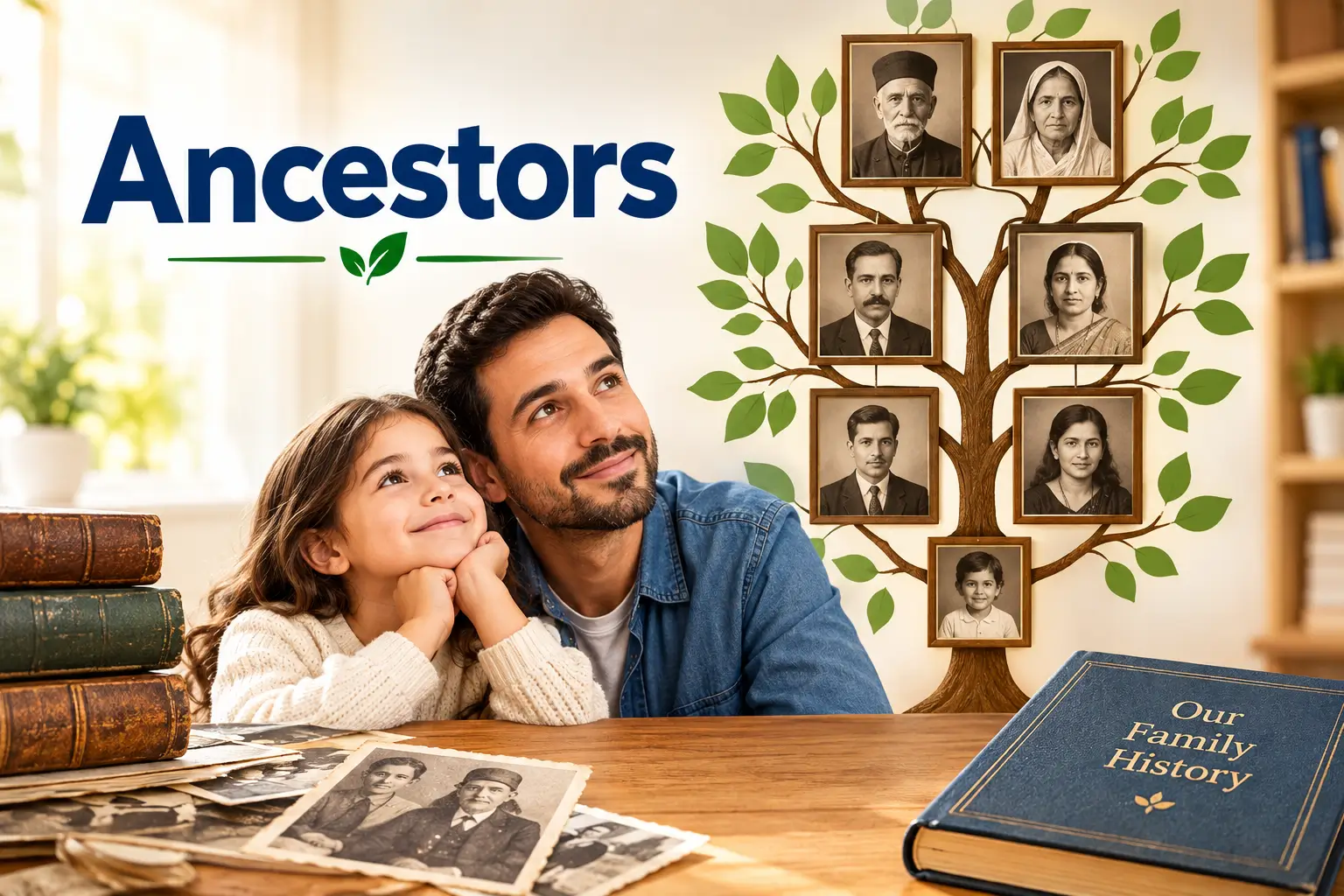
A synonym for ancestors is forebears, predecessors, forefathers, or family members from earlier generations. These words describe people from your family who lived before you. The best choice depends on the context, such as family history, genealogy, formal writing, or everyday conversation.
Introduction
Imagine finding an old photo in your grandmother’s house. Everyone in the picture looks different, but one face may share your eyes or smile. That small discovery can make family history feel much closer.
For example, a student may write about the people in their family who lived many years ago. Choosing the right word can make that story clearer and more interesting. Learning an ancestors synonym is useful because different words fit different situations.
For students, synonyms make essays stronger and less repetitive. For bloggers, they help create useful and natural content. Content writers can choose words that match the reader and topic. Daily English users can speak and write with more confidence.
“Words are the tools that shape our stories.”
The word you choose can also change the tone. A simple word may sound friendly, while another may sound historical or formal.
“Family stories help us connect yesterday with today.”
1. Forebears
Meaning: Forebears are family members who lived in earlier generations.
My forebears lived in this small village.
She studied the lives of her forebears.
2. Forefathers
Meaning: Forefathers are male family members from earlier generations.
His forefathers worked on farms.
We learned about our forefathers today.
3. Foremothers
Meaning: Foremothers are female family members from earlier generations.
Her foremothers raised large families.
The museum honors local foremothers.
4. Predecessors
Meaning: Predecessors are people who lived or worked before someone else.
Our predecessors built this old house.
She learned from her family predecessors.
5. Progenitors
Meaning: Progenitors are people from whom later family members descend.
The family remembers its early progenitors.
Their progenitors lived near the coast.
6. Progenitors
Meaning: Progenitors can describe early people who started a family line.
The records name several progenitors.
Researchers found stories about their progenitors.
7. Ancestor Figures
Meaning: Ancestor figures are respected people from earlier family generations.
The children heard about ancestor figures.
Old paintings showed several ancestor figures.
8. Family Elders
Meaning: Family elders are older relatives who may share family history.
Our family elders tell wonderful stories.
She asked family elders about their childhoods.
9. Earlier Generations
Meaning: Earlier generations means family members who lived before the present generation.
Earlier generations lived without modern phones.
We learned how earlier generations traveled.
10. Previous Generations
Meaning: Previous generations are family groups that came before the current generation.
Previous generations saved many letters.
Those letters explain previous generations’ lives.
11. Older Generations
Meaning: Older generations refers to family groups who lived before younger members.
Older generations followed different customs.
Our family remembers older generations warmly.
12. Past Generations
Meaning: Past generations describes family members who lived during earlier times.
Past generations faced many challenges.
Their stories teach us important lessons.
13. Family Predecessors
Meaning: Family predecessors are relatives who came before later family members.
Family predecessors settled near the river.
We found records about family predecessors.
14. Earlier Relatives
Meaning: Earlier relatives are family members who lived before people today.
Earlier relatives lived in another country.
The album shows many earlier relatives.
15. Previous Relatives
Meaning: Previous relatives means family members from generations that came before.
Previous relatives left behind old letters.
She wanted to understand previous relatives better.
16. Family Forebears
Meaning: Family forebears are relatives from older generations of the same family.
Our family forebears owned this land.
He wrote about his family forebears.
17. Family Ancestors
Meaning: Family ancestors are relatives from earlier generations in your family.
We researched our family ancestors online.
The children drew their family ancestors.
18. Lineage
Meaning: Lineage describes the family line connecting people across generations.
Her lineage includes many teachers.
He researched his royal lineage carefully.
19. Bloodline
Meaning: Bloodline describes people connected through the same family descent.
Their bloodline goes back centuries.
She wanted to trace her bloodline.
20. Family Line
Meaning: Family line means the connected generations belonging to one family.
His family line began nearby.
They studied their family line together.
21. Descent
Meaning: Descent describes the family connection coming down through earlier generations.
Her descent can be traced clearly.
The book explains his family descent.
22. Heritage
Meaning: Heritage includes traditions, history, and family background passed through generations.
Her heritage includes many traditions.
He enjoys learning about his heritage.
23. Ancestry
Meaning: Ancestry means the family background and people you come from.
She researched her ancestry online.
His ancestry includes several different regions.
24. Genealogy
Meaning: Genealogy is the study of family history and relationships.
He studies genealogy every weekend.
Genealogy helped her find distant relatives.
25. Kin
Meaning: Kin means people who are related to you by family.
Her kin gathered for dinner.
He traveled with his closest kin.
26. Kinsfolk
Meaning: Kinsfolk means family members or relatives connected to you.
His kinsfolk lived nearby.
She visited her kinsfolk during summer.
27. Relatives
Meaning: Relatives are people connected to you through family relationships.
My relatives live across the country.
We invited our relatives for lunch.
28. Relations
Meaning: Relations are people who belong to the same family.
Her relations helped with the move.
He contacted his relations after many years.
29. Family Members
Meaning: Family members are people who belong to your family group.
Family members shared old memories.
Several family members attended the event.
30. Kindred
Meaning: Kindred refers to people connected through family or close family ties.
Her kindred welcomed the visitors.
He stayed close to his kindred.
31. Blood Relatives
Meaning: Blood relatives are people connected through biological family relationships.
My blood relatives live abroad.
She met several blood relatives.
32. Family Stock
Meaning: Family stock refers to the people and line from which a family comes.
The family stock was carefully recorded.
He studied his family stock.
33. Family Roots
Meaning: Family roots describe the places and people connected to your family history.
They wanted to discover their family roots.
She visited the town of her family roots.
34. Origins
Meaning: Origins describe where a family or group began long ago.
The book explores their family origins.
We learned about their origins.
35. Family Origins
Meaning: Family origins describe the starting place and background of a family.
Her family origins remain interesting.
He researched his family origins.
36. Progeny
Meaning: Progeny means children or later descendants of a person or family.
Their progeny spread across the region.
The old leader left many progeny.
37. Descendants
Meaning: Descendants are people who come from an earlier family member.
Their descendants still live here.
The descendants visited the historic home.
38. Posterity
Meaning: Posterity means people who will live in future generations.
They preserved records for posterity.
The monument was built for posterity.
39. Family Lineage
Meaning: Family lineage shows the connected family members across many generations.
Her family lineage is well documented.
He created a family lineage chart.
40. Genealogical Relatives
Meaning: Genealogical relatives are family members connected through documented family history.
The database listed genealogical relatives.
She found genealogical relatives through records.
41. Blood Ancestors
Meaning: Blood ancestors are biological family members from earlier generations.
He researched his blood ancestors.
Old records named several blood ancestors.
42. Family Predecessors
Meaning: Family predecessors are people from the family who lived before later generations.
Our family predecessors lived simply.
Their family predecessors moved north.
43. Historical Relatives
Meaning: Historical relatives are family members known from earlier periods or records.
Researchers identified historical relatives.
The museum displayed their historical relatives’ letters.
44. Earlier Kin
Meaning: Earlier kin means family members who belonged to generations before yours.
Their earlier kin lived nearby.
She discovered stories about earlier kin.
45. Past Family Members
Meaning: Past family members are relatives who lived during earlier periods.
Past family members left many photographs.
We studied past family members together.
46. Family Predecessor Figures
Meaning: Family predecessor figures are notable relatives who came before later generations.
Family predecessor figures shaped their community.
The family honored predecessor figures.
47. Family Line Ancestors
Meaning: Family line ancestors are earlier relatives connected through a specific family branch.
She traced her family line ancestors.
The chart showed family line ancestors.
48. Earlier Family Members
Meaning: Earlier family members are relatives who belonged to older generations.
Earlier family members faced hard times.
Their stories helped us understand them.
49. Ancestral Relatives
Meaning: Ancestral relatives are family members connected to your earlier family history.
The records mention ancestral relatives.
She learned about ancestral relatives.
50. Founding Ancestors
Meaning: Founding ancestors are early family members who began an important family line.
The town remembers its founding ancestors.
They researched their founding ancestors.
Ancestors Synonyms and Antonyms
Common ancestors synonyms include forebears, forefathers, lineage, ancestry, relatives, and earlier generations. These words are related but do not always have exactly the same meaning. An antonym usually points toward people who come after you, such as descendants or posterity. The correct word depends on whether you mean family members, family history, or a family line.
Ancestors Synonym 9 Letters
A useful nine-letter word related to ancestors is forebears, which has nine letters. It means people in your family who lived before you. Another useful term is ancestry, although it refers more to family background than to the people themselves. Always check the sentence before choosing a synonym because related words can have different meanings.
Ancestors Antonyms
The clearest antonym for ancestors is descendants. Ancestors come before you in a family line, while descendants come after you. Other words connected with the opposite direction include progeny and posterity. For example, your great-grandparents are your ancestors, while your children, grandchildren, and later family members are your descendants.
Ancestor and Descendant
An ancestor belongs to an earlier generation, while a descendant belongs to a later generation. For example, your grandmother is your ancestor, and your grandchild is your descendant. These two words are useful when discussing genealogy, family trees, history, and family relationships because they clearly show the direction between generations.
Ancestor Example
Here is a simple ancestor example: “My great-grandfather was an ancestor who lived in this town.” Another example is, “We found an old letter written by one of our ancestors.” These sentences show how the word can describe a specific person from an earlier family generation.
FAQ: Real People Also Ask
What are 5 good synonyms?
Five useful synonyms for ancestors are forebears, forefathers, predecessors, family elders, and earlier generations. Forebears is a close general match. Forefathers specifically refers to male ancestors. Predecessors can work in broader contexts, while family elders focuses on older family members. Earlier generations is a simple phrase for general writing. Choose the word that best fits your sentence and the exact relationship you want to describe.
What is a synonym for bloodline?
A synonym for bloodline can be lineage, ancestry, or family line. Lineage is common when talking about a connected family line over generations. Ancestry focuses more on family background and origin. Family line is simpler and works well in everyday English. For example, “She researched her family line” gives a clear meaning without using the more formal word bloodline.
What do you call ancestors?
Ancestors can be called forebears, forefathers, earlier relatives, family predecessors, or earlier generations. The best word depends on the sentence. Forebears is a close synonym, while forefathers specifically refers to men. In simple everyday English, you can also say “family members from earlier generations.” This phrase is easy to understand and works well for students and general readers.
What is a synonym for “family generations”?
Possible synonyms for family generations include lineage, ancestry, family line, generations, and heritage. These terms are related but are not exact replacements in every sentence. Lineage focuses on the family connection between generations. Heritage often includes traditions and culture. Ancestry focuses on the family background and people from whom someone comes.
Conclusion
Learning synonyms for ancestors gives you more ways to talk about family history. Instead of using one word again and again, you can choose a word that fits your exact meaning. Forebears may work in a history article, while relatives may sound easier in daily speech. Lineage and ancestry are useful when discussing family history or genealogy.
For students, these words can make essays clearer and more interesting. Bloggers and content writers can use them to avoid repeated wording and create natural, useful articles. In daily conversations, simple choices such as family members, earlier generations, and relatives can help people understand your meaning quickly.
“Every new word gives you another way to express an idea.”
Try using one new synonym in an email, essay, journal entry, or conversation today. Then use another word tomorrow. Over time, this small habit can build a stronger vocabulary and make your English feel more natural.
“Good communication begins with choosing words that fit.”
Keep practicing, notice how these words appear in books and articles, and learn their small differences. The goal is not to memorize every word at once. Start with a few useful choices and build from there.

Emily writes simple, useful, and reader-friendly content, helping LexoraHubs provide valuable information to its audience.