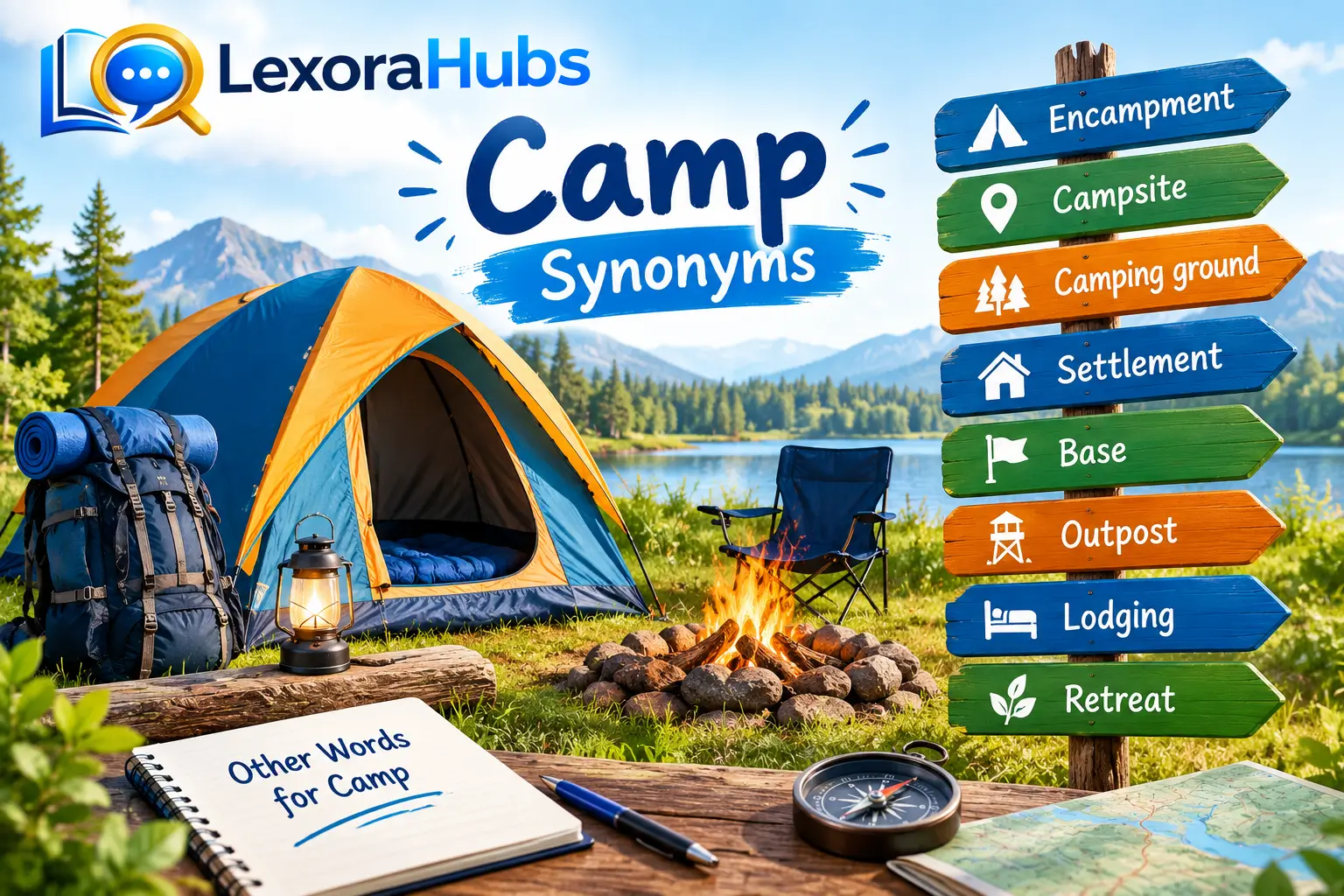
A camp synonym is a word that means the same as “camp,” like campsite, encampment, base, outpost, or garrison. These words describe a place where people stay for a short time, often outdoors. Writers use camp synonyms to avoid repeating the same word and to add more color to their sentences.
Introduction
Picture this: you are writing a story about hikers who stop for the night in the woods. You type the word “camp” five times in one paragraph. It starts to feel flat and boring. This happens to every writer at some point. A simple fix is to swap in a fresh word each time. For example, instead of “the camp was quiet,” you could write “the encampment was quiet” or “the outpost felt still.”
For students, new words like these make essays sound more advanced. For bloggers, they help posts feel less repetitive and more fun to read. For content writers, synonyms boost SEO by adding natural keyword variety. For daily English users, a bigger vocabulary makes everyday chats and messages sound sharper.
“The difference between the almost right word and the right word is really a large matter.” — Mark Twain
Small word choices like these add up over time. They shape how clear and interesting your writing feels to other people.
“Words are, of course, the most powerful drug used by mankind.” — Rudyard Kipling
Why Camp Synonyms Matter in Everyday Writing
Camp is a small word, but it carries a lot of meaning. It can mean a tent site in the woods, a military base, a summer retreat for kids, or even a group of people who share the same beliefs. Because it does so much work, writers need backup words. Using synonyms for camp helps your sentences feel less repetitive and more natural to read.
“To write simply is as difficult as to be good.” — W. Somerset Maugham
That quote fits here well. Picking the right small word takes real thought, even though it looks easy on the page. The list below gives you fifty strong options, each with a simple meaning and two short examples you can copy right into your own writing.
1. Campsite
- Meaning: A spot where people set up tents to sleep outdoors.
- Examples: We found a quiet campsite near the river. The campsite had space for six tents.
2. Encampment
- Meaning: A place where a group stays together for a short time.
- Examples: Soldiers built an encampment before the storm hit. The encampment grew larger every single day.
3. Campground
- Meaning: A public area made for camping and outdoor activities.
- Examples: The campground offered showers and a small store. Families booked spots at the campground early.
4. Bivouac
- Meaning: A simple, temporary shelter used outdoors, often without tents.
- Examples: Climbers made a bivouac near the summit. Their bivouac kept them safe overnight.
5. Tent City
- Meaning: A large group of tents set up close together.
- Examples: The festival turned into a small tent city. Volunteers helped organize the busy tent city.
6. Outpost
- Meaning: A small base placed far from the main group.
- Examples: Rangers staffed a remote outpost all summer. The outpost had limited food supplies.
7. Base
- Meaning: A central spot people return to during a trip.
- Examples: We set up base near the lake. Hikers left gear back at base.
8. Base Camp
- Meaning: A starting point used before a bigger climb or trip.
- Examples: Climbers rested at base camp for two days. The base camp sat below the mountain.
9. Garrison
- Meaning: A place where soldiers live and work together.
- Examples: The town once held a small garrison. Soldiers trained daily inside the garrison.
10. Cantonment
- Meaning: A temporary area built for soldiers to stay in.
- Examples: The army built a cantonment near the border. Life in the cantonment felt strict.
11. Barracks
- Meaning: A building where soldiers sleep and rest together.
- Examples: New recruits slept in the barracks. The barracks stayed cold at night.
12. Billet
- Meaning: A place, often a house, where soldiers are housed.
- Examples: He found a warm billet with locals. The billet was small but comfortable.
13. Settlement
- Meaning: A place where a group of people live for a while.
- Examples: The travelers built a small settlement. Their settlement grew into a village.
14. Retreat
- Meaning: A quiet place where people go to rest or think.
- Examples: She booked a weekend retreat in the hills. The retreat felt calm and peaceful.
15. Resort
- Meaning: A place people visit to relax, often outdoors.
- Examples: Our family stayed at a forest resort. The resort had cabins and trails.
16. Shelter
- Meaning: A basic place that protects people from weather.
- Examples: They built a shelter before the rain came. The shelter kept everyone dry.
17. Station
- Meaning: A fixed spot used as a base for work.
- Examples: The research station sat near the coast. Scientists lived at the station all winter.
18. Post
- Meaning: A small place where someone is stationed for duty.
- Examples: He was sent to a remote post. The post had only three workers.
19. Stronghold
- Meaning: A strong, protected place used as a base.
- Examples: Rebels used the hills as a stronghold. Their stronghold was hard to reach.
20. Colony
- Meaning: A group settlement built in a new area.
- Examples: Early settlers formed a small colony. The colony survived a harsh winter.
21. Compound
- Meaning: A closed-off area with several buildings inside.
- Examples: The research team lived in a compound. Guards watched over the compound.
22. Hideout
- Meaning: A secret place where people hide or rest.
- Examples: The kids built a hideout in the woods. Their hideout stayed hidden all summer.
23. Lodge
- Meaning: A simple building used for staying overnight outdoors.
- Examples: We stayed at a mountain lodge. The lodge had a warm fireplace.
24. Camping Ground
- Meaning: An open area set aside for pitching tents.
- Examples: The camping ground filled up by noon. Kids played across the camping ground.
25. Rest Stop
- Meaning: A place travelers pause to rest during a trip.
- Examples: We paused at a small rest stop. The rest stop had clean bathrooms.
26. Quarters
- Meaning: A place where a person or group sleeps and lives.
- Examples: Workers were given simple quarters. Their quarters sat near the gate.
27. Depot
- Meaning: A base used to store supplies and gear.
- Examples: Trucks unloaded gear at the depot. The depot stayed busy all week.
28. Muster Ground
- Meaning: A spot where a group gathers before an event.
- Examples: Troops met at the muster ground. The muster ground filled with soldiers.
29. Rendezvous Point
- Meaning: A set place where people agree to meet up.
- Examples: We picked a rendezvous point by the trail. Hikers gathered at the rendezvous point.
30. Bunkhouse
- Meaning: A simple building with beds for many people.
- Examples: Ranch workers slept in a bunkhouse. The bunkhouse had ten small beds.
31. Cabin Camp
- Meaning: A group of small cabins used for staying outdoors.
- Examples: Our trip started at a cabin camp. The cabin camp sat near a lake.
32. Layover Spot
- Meaning: A place where travelers stop briefly during a journey.
- Examples: We used the field as a layover spot. The layover spot offered shade and water.
33. Waystation
- Meaning: A stop along a route used for rest or supplies.
- Examples: Traders once used this old waystation. The waystation now sits empty.
34. Wilderness Camp
- Meaning: A camp set deep inside natural, untouched land.
- Examples: Teens attended a wilderness camp last July. The wilderness camp taught survival skills.
35. Refugee Camp
- Meaning: A place set up to shelter displaced people.
- Examples: Aid workers supported the refugee camp. The refugee camp needed more supplies.
36. Fort
- Meaning: A strong, guarded place used for defense.
- Examples: Soldiers defended the old fort. Visitors can tour the fort today.
37. Stockade
- Meaning: A fenced area used to protect a small group.
- Examples: Settlers built a wooden stockade. The stockade kept animals out.
38. Trading Post
- Meaning: A small station used for buying and selling goods.
- Examples: The town grew around a trading post. Traders met at the trading post.
39. Overnight Stop
- Meaning: A place used to rest for just one night.
- Examples: We planned an overnight stop near the ridge. The overnight stop had flat ground.
40. Hunting Camp
- Meaning: A basic camp used during hunting trips.
- Examples: My uncle owns a small hunting camp. The hunting camp opens every fall.
41. Fishing Camp
- Meaning: A simple camp built near water for fishing trips.
- Examples: We booked a fishing camp for the weekend. The fishing camp sat right on the lake.
42. Sanctuary
- Meaning: A safe place where people or animals can rest.
- Examples: The valley became a quiet sanctuary. Birds nested inside the sanctuary.
43. Hideaway
- Meaning: A small, quiet spot used to get away from others.
- Examples: They found a cozy hideaway in the hills. The hideaway had no phone signal.
44. Tent Ground
- Meaning: A flat area used mainly for setting up tents.
- Examples: The scouts picked a flat tent ground. Rain soaked the tent ground overnight.
45. Bunk Site
- Meaning: A spot where people sleep during an outdoor trip.
- Examples: Our group claimed a bunk site early. The bunk site had soft grass.
46. Field Camp
- Meaning: A temporary camp set up in an open field.
- Examples: Researchers ran a field camp for a month. The field camp studied local wildlife.
47. Base Station
- Meaning: A main point used to support outdoor operations.
- Examples: Crews returned to the base station nightly. The base station had radio equipment.
48. Halting Place
- Meaning: A spot travelers use to stop and rest briefly.
- Examples: The caravan found a halting place at dusk. Their halting place sat near a spring.
49. Encampment Site
- Meaning: The exact ground chosen for building a camp.
- Examples: They marked the encampment site with flags. The encampment site faced the river.
50. Temporary Shelter
- Meaning: A short-term place built to protect people outdoors.
- Examples: Volunteers set up temporary shelter after the flood. The temporary shelter held twenty families.
Summer Camp Synonym
When kids head off for the summer, parents often search for other words to describe it. Summer retreat, day camp, and summer program all work well in casual writing. These terms fit blog posts, school newsletters, and social captions. Using a fresh word each time keeps your writing from sounding repetitive and stiff across every single post.
Training Camp Synonym
In sports and fitness writing, training camp often becomes boot camp, workout retreat, or conditioning camp. Coaches and sports writers use these terms to describe intense practice periods before a big season. Swapping the phrase keeps articles about athletes and teams feeling varied. It also helps writers avoid sounding like a repeated press release.
Military Camp Synonym
Military writing leans on words like garrison, cantonment, barracks, and base. Each term carries a slightly different feel, from formal history books to casual news reports. Choosing the right one depends on tone and setting. A historical piece may use garrison, while a news article may simply say base for easier reading.
Base Camp Synonym
Adventure writers often replace base camp with staging area, launch point, or starting camp. These words describe the spot climbers or hikers use before a big push toward a summit. They work well in travel blogs and outdoor magazines. Picking a fresh term keeps long adventure stories feeling fresh from start to finish.
Encampment Synonym
Historical and fictional writing often swaps encampment for settlement, outpost, or tent city. These words paint a picture of a group staying together in one spot. Writers of fantasy novels and history essays both lean on this word family. It adds texture without changing the basic meaning of the scene.
Frequently Asked Questions
What does it mean if something is camp?
When something is called “camp,” it means it is over-the-top, silly, or dramatic in a fun way. Think of bold fashion, exaggerated movies, or playful humor that does not take itself too seriously. This use of the word is different from a campsite. It describes a style, not a place, and is common in fashion and pop culture writing.
What is slang for camp?
In slang, “camp” often gets shortened or mixed with other playful words like extra, theatrical, or over-the-top. These words describe the same bold, dramatic style. You will see this slang a lot on social media and in fashion reviews. It fits casual, fun writing more than formal essays or reports.
What are 5 good synonyms?
Five strong synonyms for camp, in the place sense, are campsite, encampment, outpost, base, and lodge. Each one works in slightly different writing, from casual blog posts to formal reports. Try swapping between them based on your sentence’s tone. This small habit keeps your writing varied and easy to read.
What is another word for summer camp?
Another word for summer camp is summer retreat or day camp, depending on whether kids stay overnight. Some writers also use summer program for a broader, more general term. These words work well in parenting blogs, school websites, and casual conversation. Pick the one that best fits your reader’s age and setting.
Conclusion
Learning new synonyms is one of the easiest ways to grow as a writer. It makes your blog posts, essays, and daily messages feel fresh instead of repetitive. When you know five or six words for “camp,” you can match your tone to any situation, from a fun travel post to a serious history essay. This small skill builds real confidence over time.
Try using a few of these words the next time you write an email, plan a school essay, or post on social media. Small changes like this make a big difference in how clear and interesting your writing feels to other people.

Ryan is a content writer focused on creating informative and well-structured articles for LexoraHubs readers.