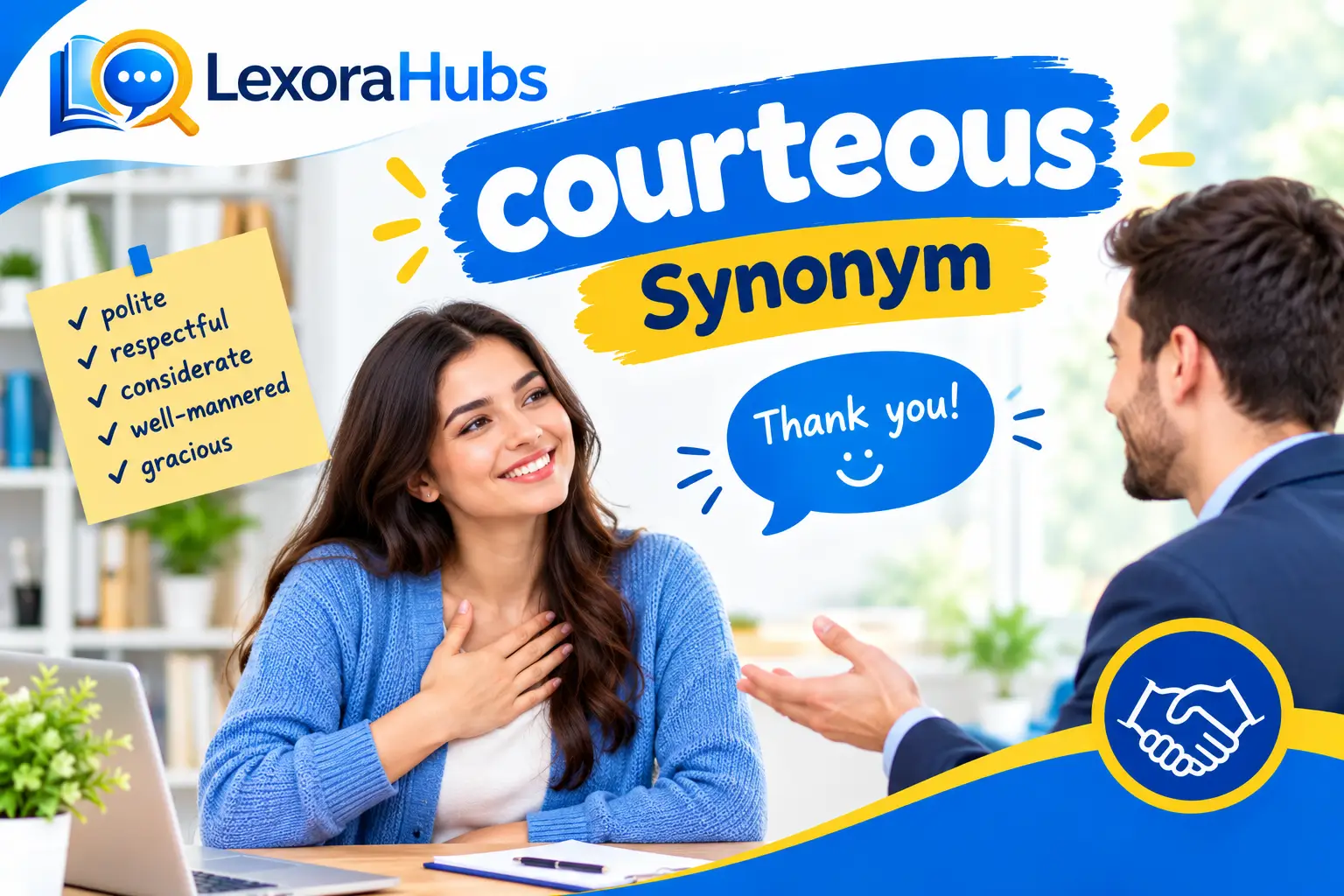
A courteous synonym is a word that describes someone who is polite, kind, respectful, or thoughtful toward others. Words such as polite, respectful, civil, and considerate can replace courteous in many sentences. The best choice depends on the situation, your tone, and the message you want to share.
Introduction
Imagine walking into a classroom and holding the door open for someone carrying books. You smile, say hello, and let them pass first. Small actions like these can make people feel welcome and respected. The words you choose can have the same effect.
For example, a student may thank a teacher for helping with a difficult lesson. Calling the student polite or respectful helps explain their behavior in a clear way.
Learning synonyms makes English easier and more interesting. Students can use them to improve essays and school assignments. Bloggers can make their posts more engaging and less repetitive. Content writers can choose words that fit their readers and topics. Daily English users can speak with more care and confidence.
However, not every similar word means exactly the same thing. Some words suit formal emails, while others fit friendly talks. Therefore, learning how each word works helps you express your ideas clearly.
“Kind words can make a hard day feel easier.”
A thoughtful choice of words can also help build trust. When you understand different ways to describe good manners, you can communicate with greater care.
“Respect begins with the way we treat each other.”
50 Synonyms for Courteous With Meanings and Examples
1. Polite
Meaning: Polite people use good manners and show care when speaking to others.
Examples:
- She was polite to every guest.
- Please be polite when asking for help.
2. Respectful
Meaning: Respectful people show that they value others and their feelings.
Examples:
- He was respectful toward his elderly neighbor.
- Respectful students listen when their teacher speaks.
3. Civil
Meaning: Civil people speak calmly and treat others with basic respect.
Examples:
- They stayed civil during the debate.
- Please keep your comments civil and kind.
4. Considerate
Meaning: Considerate people think about others before they act or speak.
Examples:
- She was considerate of her friend’s feelings.
- He gave his tired mother a seat.
5. Courteous-Minded
Meaning: Courteous-minded people try to act kindly and use good manners.
Examples:
- He remained courteous-minded during the busy meeting.
- Courteous-minded children remember to say thank you.
6. Well-Mannered
Meaning: Well-mannered people behave properly and show respect in social situations.
Examples:
- The well-mannered boy greeted every visitor.
- Her well-mannered guests waited for dinner.
7. Gracious
Meaning: Gracious people show warmth, kindness, and care when dealing with others.
Examples:
- She was gracious to the new student.
- He gave a gracious reply to everyone.
8. Amiable
Meaning: Amiable people are friendly, pleasant, and easy to talk to.
Examples:
- Our amiable neighbor always greets us warmly.
- The amiable host welcomed every guest inside.
9. Respectable
Meaning: Respectable people behave in ways that earn trust and respect.
Examples:
- He maintained a respectable tone throughout the discussion.
- She acted in a respectable way at work.
10. Tactful
Meaning: Tactful people choose words carefully to avoid hurting other people’s feelings.
Examples:
- She gave a tactful answer to his question.
- His tactful words helped calm the upset customer.
11. Diplomatic
Meaning: Diplomatic people handle difficult talks with care and avoid needless conflict.
Examples:
- He gave a diplomatic reply during the argument.
- Her diplomatic approach helped both friends agree.
12. Thoughtful
Meaning: Thoughtful people notice what others need and try to make them feel valued.
Examples:
- She sent a thoughtful note to her teacher.
- That was thoughtful of you to remember my birthday.
13. Kind
Meaning: Kind people care about others and try to make life better.
Examples:
- He was kind to the lonely child.
- Please be kind when sharing your opinion.
14. Friendly
Meaning: Friendly people act warmly and make others feel welcome around them.
Examples:
- The friendly clerk helped me find my bag.
- She gave the visitors a friendly smile.
15. Civilized
Meaning: Civilized behavior follows shared rules of respect, care, and good manners.
Examples:
- They had a civilized talk about the problem.
- Please keep the meeting civilized and calm.
16. Gentle
Meaning: Gentle people use soft words and avoid treating others harshly.
Examples:
- She gave the nervous child a gentle smile.
- He used a gentle voice with his puppy.
17. Patient
Meaning: Patient people stay calm when others need time, help, or understanding.
Examples:
- The patient teacher explained the lesson again.
- Please be patient while your friend learns.
18. Attentive
Meaning: Attentive people listen closely and notice what others say or need.
Examples:
- The attentive waiter brought us extra water.
- She was attentive when her friend spoke.
19. Helpful
Meaning: Helpful people offer support and make tasks easier for others.
Examples:
- Our helpful neighbor carried the heavy boxes.
- He was helpful when I lost my keys.
20. Accommodating
Meaning: Accommodating people try to meet others’ needs and make things easier.
Examples:
- The accommodating host changed our dinner time.
- She was accommodating when we needed extra chairs.
21. Courteous
Meaning: Courteous people use good manners and treat others with care and respect.
Examples:
- The driver was courteous to every passenger.
- Please remain courteous during the phone call.
22. Civil-Minded
Meaning: Civil-minded people care about respectful behavior and peaceful relations with others.
Examples:
- The civil-minded neighbors solved their problem peacefully.
- He encouraged civil-minded talks at the meeting.
23. Polished
Meaning: Polished people speak and behave in a smooth, careful, and respectful way.
Examples:
- Her polished reply impressed the office manager.
- He gave a polished speech at school.
24. Refined
Meaning: Refined behavior shows good manners, care, and respect in social settings.
Examples:
- She showed refined manners at the formal dinner.
- His refined speech suited the special event.
25. Urbane
Meaning: Urbane people are confident, polite, and comfortable in social settings.
Examples:
- The urbane host spoke kindly to everyone.
- His urbane manner suited the formal event.
26. Neighborly
Meaning: Neighborly people show kindness and care to people around their homes.
Examples:
- Our neighborly friend brought soup when we were sick.
- She gave the new family a neighborly welcome.
27. Welcoming
Meaning: Welcoming people make others feel accepted, comfortable, and happy to be present.
Examples:
- The welcoming staff showed us to our seats.
- His welcoming smile made me feel at home.
28. Warm
Meaning: Warm people show friendly feelings and make others feel safe and valued.
Examples:
- She gave the new worker a warm greeting.
- His warm words cheered up his friend.
29. Pleasant
Meaning: Pleasant people behave in ways that make time together feel enjoyable.
Examples:
- We had a pleasant chat after lunch.
- The pleasant shopkeeper answered all my questions.
30. Agreeable
Meaning: Agreeable people are pleasant to deal with and willing to cooperate.
Examples:
- She was agreeable when we changed our plans.
- The agreeable guest thanked everyone before leaving.
31. Graciously Polite
Meaning: Graciously polite people show good manners with warmth and sincere kindness.
Examples:
- She graciously welcomed us into her home.
- He graciously thanked the team for their help.
32. Well-Behaved
Meaning: Well-behaved people follow rules and treat others in an appropriate way.
Examples:
- The well-behaved children waited quietly in line.
- Her well-behaved dog greeted guests without jumping.
33. Courteous-Spoken
Meaning: Courteous-spoken people use kind, respectful words when talking with others.
Examples:
- The courteous-spoken clerk answered every question patiently.
- He stayed courteous-spoken during the difficult call.
34. Soft-Spoken
Meaning: Soft-spoken people talk gently and avoid using a loud or harsh voice.
Examples:
- The soft-spoken nurse comforted the worried child.
- Our soft-spoken teacher rarely raises her voice.
35. Civil Tongued
Meaning: Civil-tongued people choose words that remain respectful, even during disagreements.
Examples:
- He stayed civil tongued during the heated debate.
- She gave a civil-tongued answer to the complaint.
36. Diplomatic-Minded
Meaning: Diplomatic-minded people seek calm solutions and consider different points of view.
Examples:
- The diplomatic-minded leader listened to both sides.
- Her diplomatic-minded response prevented a bigger argument.
37. Thoughtful-Minded
Meaning: Thoughtful-minded people consider how their words and actions affect other people.
Examples:
- The thoughtful-minded student helped her new classmate.
- He made a thoughtful-minded choice before replying.
38. Respectful-Minded
Meaning: Respectful-minded people value others and try to treat everyone fairly.
Examples:
- The respectful-minded coach praised every player.
- She remained respectful-minded during the hard discussion.
39. Well-Spoken
Meaning: Well-spoken people express their thoughts clearly, politely, and with care.
Examples:
- The well-spoken student thanked the school principal.
- Her well-spoken reply made the meeting easier.
40. Courteous-Hearted
Meaning: Courteous-hearted people care about others and show kindness through their actions.
Examples:
- The courteous-hearted nurse helped the older man.
- A courteous-hearted neighbor offered to carry our bags.
41. Civilized-Minded
Meaning: Civilized-minded people value peaceful talks and respectful behavior in daily life.
Examples:
- The civilized-minded group settled the issue without shouting.
- He encouraged civilized-minded discussion in the classroom.
42. Compassionate
Meaning: Compassionate people care about suffering and try to help those in need.
Examples:
- She was compassionate toward the injured bird.
- His compassionate words comforted a sad friend.
43. Empathetic
Meaning: Empathetic people try to understand how others feel in different situations.
Examples:
- The empathetic teacher listened to my worries.
- She gave an empathetic reply to her friend.
44. Mild-Mannered
Meaning: Mild-mannered people stay calm and avoid angry or rude behavior.
Examples:
- Our mild-mannered uncle rarely gets upset.
- The mild-mannered worker handled the complaint calmly.
45. Unassuming
Meaning: Unassuming people are modest and do not try to impress everyone.
Examples:
- The unassuming guest thanked the host quietly.
- She remained unassuming after winning the school prize.
46. Obliging
Meaning: Obliging people are willing to help and make reasonable requests easier.
Examples:
- The obliging clerk helped us fill out the form.
- He was obliging when I asked for directions.
47. Cooperative
Meaning: Cooperative people work with others and help everyone reach a shared goal.
Examples:
- The cooperative team finished the project early.
- She stayed cooperative while planning the class event.
48. Civil-Hearted
Meaning: Civil-hearted people value fairness and treat others with basic kindness.
Examples:
- The civil-hearted neighbor helped settle the dispute.
- He remained civil-hearted when others disagreed with him.
49. Courteous-Mannered
Meaning: Courteous-mannered people show respect through their words, choices, and everyday actions.
Examples:
- The courteous-mannered guest thanked the cook warmly.
- Our courteous-mannered driver waited for the elderly passenger.
50. Decent
Meaning: Decent people act fairly and treat others with honesty and respect.
Examples:
- He was decent enough to admit his mistake.
- A decent reply can prevent a needless argument.
A quick usage note: Some expressions above, such as courteous-hearted, courteous-mannered, and civil-hearted, are uncommon or creative phrases rather than standard dictionary synonyms. For schoolwork, formal writing, and SEO content, the safest choices are polite, respectful, considerate, civil, gracious, tactful, and well-mannered.
Courteous Opposite
The opposite of courteous is rude. Other choices include impolite, disrespectful, discourteous, and ill-mannered. These words describe behavior that ignores other people’s feelings or breaks common rules of respect. For example, interrupting someone repeatedly may seem rude, while listening patiently shows courtesy. Choose an opposite based on how strong the behavior is: impolite can sound mild, while disrespectful suggests a clearer lack of respect.
Polite and Courteous Synonyms
The words polite and courteous are close in meaning, and both describe good manners. Other useful options include respectful, civil, gracious, considerate, and well-mannered. Polite often refers to following social rules, such as saying please and thank you. Courteous can place more focus on thoughtful actions toward others. In professional emails, “Thank you for your courteous reply” sounds natural, while “She was polite to the guests” suits everyday conversation.
Courteous Pronunciation
The word courteous is usually pronounced KUR-tee-us in American English. It has two syllables, with the stress on the first part. Say it slowly as “KUR” plus “tee-us,” then join the sounds smoothly. Practicing the word in a full sentence can make it easier to remember: “The receptionist was courteous to every visitor.” Listening to a trusted English dictionary’s audio pronunciation can also help you match the vowel sounds.
Courteous in a Sentence
Here is a simple example: “The courteous student held the door open for her teacher.” In this sentence, courteous describes the student’s thoughtful behavior. You can also write, “Please remain courteous when speaking with customers.” In formal writing, the word can describe helpful service, respectful communication, or good manners. Try replacing it with polite or considerate and see whether the sentence keeps the same meaning.
Frequently Asked Questions About Courteous Synonyms
1. What does “courteous” mean?
Courteous means showing good manners, respect, and kindness toward other people. A courteous person listens when others speak, says thank you, and avoids rude behavior. For example, a shop worker who welcomes customers warmly is being courteous. The word can describe speech, actions, service, or behavior. Using it helps explain how someone treats others in daily life, school, or the workplace.
2. What is another word for courtesy?
Another word for courtesy is politeness. Other related words include respect, consideration, kindness, and good manners. Courtesy is a noun, while courteous is an adjective. For example, “She showed courtesy to the visitors” describes her behavior, while “She was courteous to the visitors” describes her directly. Choosing the right form helps you write clear sentences and avoid grammar mistakes in essays, emails, and everyday communication.
3. What word is courteous?
Courteous is an adjective. It describes a person, action, or manner that shows good manners and respect. For example, you can say, “The courteous driver stopped to let the children cross.” Here, the adjective describes the driver’s behavior. The related noun is courtesy, and the adverb is courteously. Learning these word forms helps you use the term correctly in different sentences and improve your overall English vocabulary.
4. What is another word for “courteous” or “polite”?
Respectful is a strong alternative to both courteous and polite. Other useful choices include considerate, civil, gracious, and well-mannered. However, the best word depends on your sentence. Use tactful when someone handles a sensitive topic carefully, or gracious when someone responds warmly. For example, “She gave a respectful answer” and “She gave a courteous answer” express similar ideas, although the first places greater focus on respect.
Conclusion
Learning courteous synonyms can make your English clearer, friendlier, and more interesting. Instead of using the same word in every sentence, you can choose from words like polite, respectful, considerate, gracious, and tactful. Each word adds a slightly different meaning, helping you describe people and actions more accurately.
Students can use these words in essays, homework, and classroom discussions. Bloggers and content writers can improve their articles by choosing natural words that fit each topic. In daily conversations, the right words can help you express respect and avoid misunderstandings.
However, remember that synonyms are not always perfect replacements. A word that works in a friendly conversation may not fit a formal email. Therefore, consider your audience, the situation, and the meaning you want to share before choosing a word.
“Good manners make small moments meaningful.”
Start by learning three new synonyms each day. Write a sentence with each word, then use one in an email or conversation. You can also read your writing aloud to check whether the words sound natural.
“Clear words and kind actions build stronger connections.”

Emily writes simple, useful, and reader-friendly content, helping LexoraHubs provide valuable information to its audience.