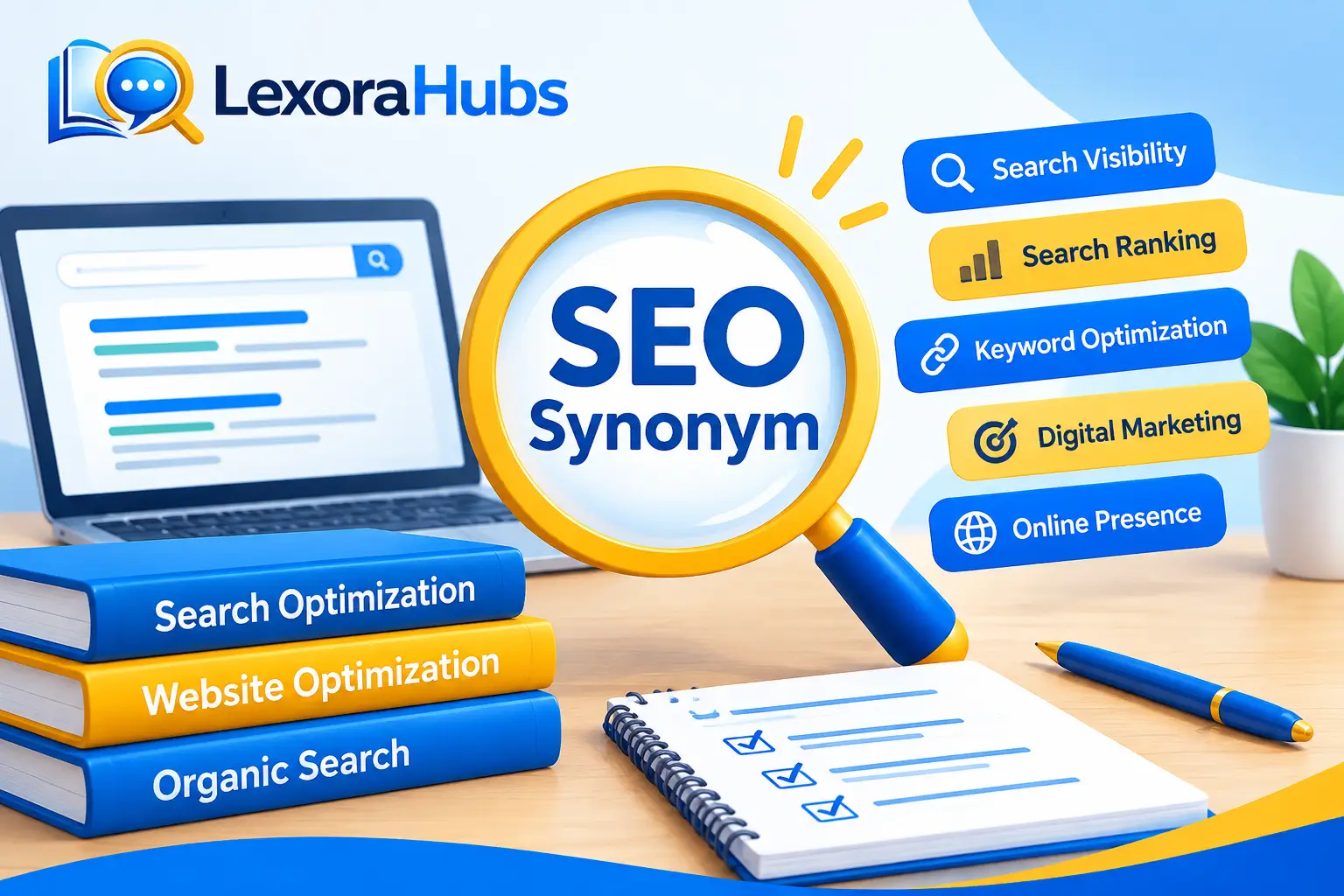
A common SEO synonym is “search engine optimization,” which is the full name of SEO. Other closely related terms include search optimization, organic search marketing, website optimization, and search visibility. These words describe work that helps websites appear more clearly and naturally in search results and reach the right online audience.
Introduction
Imagine writing a helpful article and publishing it online. You know the article is useful, but very few people find it. This is where SEO becomes important. It helps your content become easier for search engines and readers to discover.
For example, a small shop may use better page titles, useful keywords, and clear content so its website can appear in Google searches. These simple changes can help more people find the business.
Learning SEO words is useful for students because it builds digital vocabulary. For bloggers, these terms make articles easier to plan. Content writers can use them to discuss search work clearly. Daily English users can understand common online marketing language more easily.
Also, knowing related terms helps you avoid using the same word again and again. However, each term can have a slightly different meaning. Therefore, learning them together makes your writing more natural.
“Good writing makes ideas clear, useful, and easy to understand.”
A strong vocabulary can also help when you read websites, marketing guides, or job descriptions. For example, a writer may see terms such as organic search, rankings, or website optimization and understand what they mean.
“The right word can make a simple message much clearer.”
50 SEO Synonyms and Related Terms
1. Search Engine Optimization
Meaning: This is the full name for SEO and describes improving websites for search engines.
Examples: Search engine optimization helps websites get found. Good optimization can increase organic visitors.
2. Search Optimization
Meaning: Search optimization means improving content so people can find it online.
Examples: We use search optimization for blogs. Better pages can attract more readers.
3. Organic Search Optimization
Meaning: Organic search optimization improves unpaid visibility in search engine results.
Examples: Organic search optimization takes steady effort. The website gained more unpaid traffic.
4. Website Optimization
Meaning: Website optimization improves pages, content, speed, and structure for better performance.
Examples: Website optimization helped our pages load faster. The site became easier to use.
5. Web Optimization
Meaning: Web optimization means making a website work better for users and search engines.
Examples: Web optimization improved the whole site. Visitors now find pages more easily.
6. Search Marketing
Meaning: Search marketing uses search engines to help businesses reach interested people.
Examples: Search marketing brings new customers online. Our team studies search marketing trends.
7. Organic Search Marketing
Meaning: Organic search marketing focuses on gaining unpaid visitors from search engines.
Examples: Organic search marketing needs useful content. Our blog gets steady organic visits.
8. Search Visibility
Meaning: Search visibility shows how easily people can see a website in search results.
Examples: Our search visibility improved this month. Better pages increased online exposure.
9. Online Visibility
Meaning: Online visibility means how easily people can find a business or website online.
Examples: SEO improved our online visibility. More customers now discover our website.
10. Search Ranking
Meaning: Search ranking describes where a webpage appears in search engine results.
Examples: Our search ranking improved today. The page now appears near the top.
11. Search Positioning
Meaning: Search positioning means improving where webpages appear for useful search terms.
Examples: Search positioning takes careful planning. The company improved its online position.
12. Search Performance
Meaning: Search performance shows how well a website gains attention from search engines.
Examples: Search performance improved after updates. We check results every month.
13. Organic Visibility
Meaning: Organic visibility means appearing naturally in search results without paying for ads.
Examples: Organic visibility takes useful content. Our pages receive more natural visits.
14. Organic Growth
Meaning: Organic growth means gaining website visitors naturally through useful online content.
Examples: Organic growth takes time and patience. The blog gained readers steadily.
15. Organic Traffic
Meaning: Organic traffic consists of visitors who reach a site through unpaid search results.
Examples: Organic traffic increased this year. Most visitors came from Google searches.
16. Search Traffic
Meaning: Search traffic is website traffic that comes from search engine results.
Examples: Search traffic grew quickly. New articles brought more visitors.
17. Search Engine Marketing
Meaning: Search engine marketing covers marketing activities that use search engines to reach users.
Examples: Search engine marketing supports online campaigns. Businesses use it to reach customers.
18. Web Marketing
Meaning: Web marketing promotes websites, products, or services through online channels.
Examples: Web marketing helps small businesses grow. Our team creates online campaigns.
19. Digital Marketing
Meaning: Digital marketing promotes brands through websites, search, social media, and other digital channels.
Examples: Digital marketing reaches people online. SEO is one important digital strategy.
20. Online Marketing
Meaning: Online marketing uses the internet to promote products, services, or brands.
Examples: Online marketing helps stores find buyers. The campaign reached many users.
21. Search Strategy
Meaning: A search strategy is a plan for improving website visibility in search results.
Examples: Our search strategy targets useful topics. The plan focuses on readers first.
22. SEO Strategy
Meaning: An SEO strategy is a planned approach for improving organic search performance.
Examples: Our SEO strategy uses useful keywords. The team also improves old pages.
23. Search Optimization Strategy
Meaning: This strategy organizes actions that help content perform better in search.
Examples: Our search optimization strategy is simple. We focus on useful content.
24. Content Optimization
Meaning: Content optimization improves written material so it helps readers and search engines.
Examples: Content optimization made the article clearer. We added useful headings and examples.
25. On-Page Optimization
Meaning: On-page optimization improves elements found directly on a webpage.
Examples: On-page optimization improved our article. We fixed headings and page titles.
26. Technical SEO
Meaning: Technical SEO improves the technical parts that help search engines access websites.
Examples: Technical SEO fixed several website errors. Pages now load more smoothly.
27. Local SEO
Meaning: Local SEO helps businesses appear in searches connected to nearby places.
Examples: Local SEO helps nearby customers. The shop improved its local listing.
28. Mobile SEO
Meaning: Mobile SEO improves website performance and usability on mobile devices.
Examples: Mobile SEO matters for phone users. Our pages now work better on screens.
29. Image SEO
Meaning: Image SEO improves images so they can support website visibility and accessibility.
Examples: Image SEO uses useful alt text. We also compress large images.
30. Video SEO
Meaning: Video SEO helps videos become easier to discover in search results.
Examples: Video SEO improved our channel. Clear titles helped viewers find videos.
31. Keyword Optimization
Meaning: Keyword optimization uses relevant search terms naturally within useful website content.
Examples: Keyword optimization improved the article. We avoided repeating words too much.
32. Keyword Targeting
Meaning: Keyword targeting focuses content on specific terms people use when searching online.
Examples: Keyword targeting guides our article. We choose terms based on reader needs.
33. Search Term Optimization
Meaning: Search term optimization improves content around phrases people commonly search for.
Examples: Search term optimization supports our blog. We study phrases before writing.
34. SERP Optimization
Meaning: SERP optimization aims to improve how pages appear on search results pages.
Examples: SERP optimization improves page presentation. Better titles may attract more clicks.
35. Ranking Optimization
Meaning: Ranking optimization involves improving pages to support stronger search positions.
Examples: Ranking optimization requires useful content. We also improve page structure.
36. Search Ranking Improvement
Meaning: Search ranking improvement means making changes that may strengthen a webpage’s position.
Examples: Search ranking improvement takes time. The team tracks results carefully.
37. Search Engine Visibility
Meaning: Search engine visibility describes how often users can find a site through search.
Examples: Search engine visibility increased recently. More pages now appear in results.
38. Website Visibility
Meaning: Website visibility shows how easily people can discover a website online.
Examples: Website visibility matters for brands. Better content can improve discovery.
39. Digital Visibility
Meaning: Digital visibility describes how noticeable a brand is across online channels.
Examples: Digital visibility helps new brands. Social and search channels both matter.
40. Online Discoverability
Meaning: Online discoverability means how easily people can find information on the internet.
Examples: Online discoverability improved after updates. Customers found the service faster.
41. Search Discoverability
Meaning: Search discoverability means how easily search engines can help users find your content.
Examples: Search discoverability supports new websites. Clear pages make information easier to find.
42. Website Discoverability
Meaning: Website discoverability describes how easily users can discover a site through online searches.
Examples: Website discoverability improved greatly. New pages brought more search visitors.
43. Search Reach
Meaning: Search reach describes the number of people who may discover content through search.
Examples: Search reach grew after publishing. Useful topics attracted a wider audience.
44. Organic Reach
Meaning: Organic reach means reaching people naturally without paying directly for advertisements.
Examples: Organic reach can grow slowly. Helpful articles may reach many readers.
45. Search Growth
Meaning: Search growth describes increasing visits, visibility, or rankings from search activity.
Examples: Search growth takes consistent work. The website gained visitors over time.
46. SEO Marketing
Meaning: SEO marketing uses search-focused methods to attract interested website visitors.
Examples: SEO marketing supports our blog. We create content around useful topics.
47. Search-Based Marketing
Meaning: Search-based marketing reaches people through information they actively seek online.
Examples: Search-based marketing follows user needs. Helpful pages can answer questions quickly.
48. Search Engine Promotion
Meaning: Search engine promotion means promoting website content through search-focused methods.
Examples: Search engine promotion supports our online goals. The team creates useful pages.
49. Website Search Strategy
Meaning: A website search strategy plans how pages can gain useful search visibility.
Examples: Our website search strategy is clear. Each page serves a specific purpose.
50. Organic Search Strategy
Meaning: An organic search strategy plans how a site can gain unpaid search visitors.
Examples: Our organic search strategy values quality. We publish helpful content regularly.
“Strong online growth starts with useful content and clear search goals.”
SEO Meaning
SEO stands for Search Engine Optimization. It is the process of improving a website so search engines can understand its pages and users can find useful information more easily.
SEO can include keyword research, helpful writing, page titles, internal links, image optimization, technical improvements, and good website structure. The main goal is not simply to use many keywords. Instead, strong SEO connects useful content with what people are searching for.
For bloggers and businesses, SEO can help bring organic traffic without relying only on paid advertising.
Google Trends
Google Trends is a useful tool for studying how search interest changes over time. Writers can use it to compare topics, notice growing interest, and understand seasonal searches.
For example, a blogger writing about holiday gifts may see that related searches rise before a holiday. This information can help with content planning.
However, search interest does not automatically mean a topic will rank well. Good content, useful information, and a strong website still matter.
Frequently Asked Questions
What is another name for SEO?
The most common full name for SEO is Search Engine Optimization. This is not simply a similar phrase; it is what the abbreviation SEO stands for. You may also see related terms such as search optimization, organic search marketing, website optimization, and search visibility. These terms can describe parts of SEO or closely connected activities. Their exact meaning can change based on the writer, website, or marketing context.
What is SEO in simple words?
SEO is the process of helping a website become easier to find through search engines. In simple terms, it helps search engines understand your pages and helps users discover useful information. SEO can include writing helpful content, choosing relevant search terms, improving page speed, creating clear headings, and making websites easy to use. The goal is to connect people with information that matches what they are searching for.
What is similar to SEO?
Several terms are closely related to SEO. These include search optimization, website optimization, organic search marketing, search visibility, content optimization, and keyword optimization. However, they are not always exact synonyms. Some describe a smaller part of SEO. For example, content optimization focuses mainly on improving content, while technical SEO focuses on website technology and structure. Using the right term depends on the specific task being discussed.
What are some common words related to SEO?
Common SEO words include keywords, rankings, organic traffic, search results, SERP, backlinks, content, search intent, crawling, indexing, and visibility. These terms help explain different parts of search optimization. For example, keywords describe search phrases, while organic traffic refers to visitors who arrive through unpaid search results. Learning these basic terms makes SEO articles, reports, and conversations much easier to understand.
Conclusion
Learning an SEO synonym or related term can make your writing clearer and more varied. Instead of repeating “SEO” many times, you can use terms such as search optimization, website optimization, organic search, search visibility, or content optimization when they fit the meaning.
These words are useful for many people. Bloggers can use them when planning articles. Content writers can choose more precise language. Students can build stronger digital vocabulary. Business owners can understand marketing reports and website discussions more easily. Even casual internet users can benefit from knowing common search terms.
Remember that related words are not always perfect replacements. Search engine optimization is the full name of SEO, while terms like keyword optimization or technical SEO usually describe specific parts of the larger process. Therefore, always choose a word that matches your exact meaning.
Practice these terms in emails, essays, blog posts, reports, and daily conversations. Start with a few simple words, then add more as you become comfortable. Over time, this vocabulary will make your English sound more natural and your online writing more precise.
“A wider vocabulary gives you more ways to express one clear idea.”
“Practice simple words often, and confident writing will follow.”

Emily writes simple, useful, and reader-friendly content, helping LexoraHubs provide valuable information to its audience.